In brief
US-China trade negotiations have become a high-stakes game of perception as both leaders eye domestic audiences while managing international pressure.
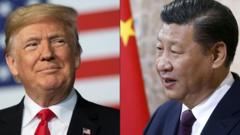
The recent announcement from Chinese state media regarding US attempts to initiate tariff talks has sparked renewed interest and speculation regarding the US-China trade war. With tariffs on specific Chinese exports reaching an astonishing 245%, the trade relations between these two economic giants are under intense strain, creating fears of a looming recession. A social media post from Yuyuantantian, associated with China Central Television, stated that the US has reached out for negotiations, asserting that the US is the more anxious party in this situation. However, this claim was met with skepticism by Beijing, which maintains that it doesn't require discussions with Washington.The ongoing dispute has led to a cycle of claims and counterclaims, with both nations hesitant to publicly take the first step toward negotiations, fearing it would make them appear weaker. Analysts describe this dynamic as a game of "chicken," with both President Trump and Chinese leader Xi Jinping attempting to safeguard their reputations while seeking a mutually advantageous resolution that could ease trade tensions.Experts indicate that both leaders are keenly aware of the optics involved. Trump aims to convince Americans he is winning his battle for economic superiority, while Xi needs to demonstrate to his citizens that he is standing firm against external pressures. The stakes are high; both administrations are grappling with economic challenges intensified by the tariffs, putting additional pressure on them to reach an agreement.This inaction reflects a broader strategy of "constructive ambiguity," where both parties seek to navigate the negotiation waters without directly implying weakness. Each side appears to be waiting for the other to make the first overture, potentially prolonging the stalemate.As discussions seem inevitable, the question remains: how will both nations pave the way towards a solution that allows them to save face domestically? While both parties are ostensibly engaged in talks, they must also balance national interests with the need to appear strong. Consequently, the possibility of a breakthrough seems contingent on how both leaders manage their domestic narratives while simultaneously avoiding the appearance of conceding to the other.Analysts posit that for Xi, these negotiations represent a "two-level game," negotiating with the US while maintaining a narrative of Chinese strength at home. Meanwhile, revelations suggest that some form of contact is quickly evolving, raising cautious hopes for an eventual resolution. Yet, until both leaders are prepared to step back and seek compromise, the trade tensions are likely to continue their volatile trajectory.