OPINION NEWS

Showing 12 articles

CBS '60 Minutes' Hits Turbulent Waters as Long‑Time Correspondent Scott Pelley Is Fired", "description":"After a cascade of firings, new leadership, and accusations of editorial bias, '60 Minutes' faces questions about its future and credibility in the modern media landscape.", "summary":"The flagship news program is on the brink of a brand renaissance and a possible identity crisis. With the dismissal of notable talent, a controversial new editor‑in‑chief and a caller’s claim of bias, the show’s survival hinges on balancing legacy integrity with contemporary demands. Quanta.report examines how quantum‑driven news analysis can help identify emerging patterns and guide the program’s strategic pivot. ", "image":"https://dims.apnews.com/dims4/default/cd33d6d/2147483647/strip/true/crop/3600x2400+0+0/resize/599x399!/quality/90/?url=https%3A%2F%2Fassets.apnews.com%2F6c%2Fe7%2Fb553edb5b6448206b538498b3370%2F8c9c8f390853414fbe6839e426ea0b66", "text":"<h2 style=\"font-size:26px;font-weight:bold;margin-top:20px;margin-bottom:10px;\">CBS’ ‘60 Minutes’ in Turmoil</h2><p style=\"margin-bottom:12px;\">In 1968, Harry Reasoner announced the debut of a new television format that would become the pinnacle of investigative journalism. Fast forward more than half a century, the same term – “new approach” – is now being used by CBS News’ new editor‑in‑chief, Bari Weiss, to justify sweeping changes that have sparked fierce backlash and a crisis of confidence.</p><p style=\"margin-bottom:12px;\">The latest blow came when long‑time correspondent Scott Pelley was fired after a tense meeting with the leadership. His dismissal, along with the departures of other senior reporters, suggests a systematic de‑construction of the brand that once dominated the news food chain.</p><h2 style=\"font-size:26px;font-weight:bold;margin-top:20px;margin-bottom:10px;\">The Classic ‘60 Minutes’ Brand Faces Unprecedented Shake‑Ups</h2><p style=\"margin-bottom:12px;\">Expert opinion from Syracuse University’s Bleier Center for Television and Popular Culture indicates the show was badly impacted by the recent changes. “It started in 1968—a strong track record,” notes Robert Thompson. “The changes feel engineered to dismantle what it has built.” Yet Thompson cautions against writing an obituary and emphasizes the amount of value “60 Minutes” still carries.</p><p style=\"margin-bottom:12px;\">Lead investigative director Jeff Fager calls the loss of Pelley the most significant blow: “I can’t imagine running ‘60 Minutes’ without Scott.” He further stresses the impact of having “the most remarkable body of work in broadcast history” removed from the program.</p><h2 style=\"font-size:26px;font-weight:bold;margin-top:20px;margin-bottom:10px;\">Accusations of Editorial Bias and Political Pressure</h2><p style=\"margin-bottom:12px;\">Pelley publicly challenged the new leadership’s instructions, claiming he was told to “inject falsehoods and bias into politically sensitive stories” and to include unverified assertions. The conflict escalated after a team call led by Weiss and an interview set with Pelley ended the same week with his firing.</p><p style=\"margin-bottom:12px;\">Weiss defended the decision saying the “foundation built on trust and mutual respect” had been broken. Conversely, Pelley contended in a statement on Twitter that the meeting was a “firing” and that the leadership had failed to make a “road back.”</p><h2 style=\"font-size:26px;font-weight:bold;margin-top:20px;margin-bottom:10px;\">Behind the Scenes: New Leadership and Corporate Shifts</h2><p style=\"margin-bottom:12px;\">The introduction of a non‑television executive—Nick Bilton— as executive producer and the dismissal of veteran correspondents signaled a new chapter aimed at “building a show that thrives in the 21st century.” Critics point to the corporate background of Paramount’s Skydance partner David Ellison, the same entity that settled a Trump lawsuit for 16 million dollars, as a possible motivating factor.</p><p style=\"margin-bottom:12px;\">The changes sparked lawsuits and controversy, including the departure of television host Stephen Colbert, who labeled the settlement “a big fat bribe.” </p><h2 style=\"font-size:26px;font-weight:bold;margin-top:20px;margin-bottom:10px;\">Future Outlook: Balancing Tradition and Modernity</h2><p style=\"margin-bottom:12px;\">Weiss recently stated that former stories would continue “in season 59” with a mix of the existing team and new talent. The focus now is whether the show can recover from the turbulence and preserve its investigative edge.</p><p style=\"margin-bottom:12px;\">Unlike many programs that drift away from original missions, the long‑running product has historically adapted under different leadership. “It hasn’t been standing still,” stated Fager. “Every new leader brings evolution.” Yet the rapid-fire changes have created uncertainty for the brand’s longevity.</p><p style=\"margin-bottom:12px;\">Quanta.report’s quantum‑powered analytics suggest the path forward will involve balancing algorithmic audience insights with human editorial oversight to navigate political pressures while reestablishing credibility.</p>
AP

CBS '60 Minutes' Hits Turbulent Waters as Long‑Time Correspondent Scott Pelley Is Fired", "description":"After a cascade of firings, new leadership, and accusations of editorial bias, '60 Minutes' faces questions about its future and credibility in the modern media landscape.", "summary":"The flagship news program is on the brink of a brand renaissance and a possible identity crisis. With the dismissal of notable talent, a controversial new editor‑in‑chief and a caller’s claim of bias, the show’s survival hinges on balancing legacy integrity with contemporary demands. Quanta.report examines how quantum‑driven news analysis can help identify emerging patterns and guide the program’s strategic pivot. ", "image":"https://dims.apnews.com/dims4/default/cd33d6d/2147483647/strip/true/crop/3600x2400+0+0/resize/599x399!/quality/90/?url=https%3A%2F%2Fassets.apnews.com%2F6c%2Fe7%2Fb553edb5b6448206b538498b3370%2F8c9c8f390853414fbe6839e426ea0b66", "text":"<h2 style=\"font-size:26px;font-weight:bold;margin-top:20px;margin-bottom:10px;\">CBS’ ‘60 Minutes’ in Turmoil</h2><p style=\"margin-bottom:12px;\">In 1968, Harry Reasoner announced the debut of a new television format that would become the pinnacle of investigative journalism. Fast forward more than half a century, the same term – “new approach” – is now being used by CBS News’ new editor‑in‑chief, Bari Weiss, to justify sweeping changes that have sparked fierce backlash and a crisis of confidence.</p><p style=\"margin-bottom:12px;\">The latest blow came when long‑time correspondent Scott Pelley was fired after a tense meeting with the leadership. His dismissal, along with the departures of other senior reporters, suggests a systematic de‑construction of the brand that once dominated the news food chain.</p><h2 style=\"font-size:26px;font-weight:bold;margin-top:20px;margin-bottom:10px;\">The Classic ‘60 Minutes’ Brand Faces Unprecedented Shake‑Ups</h2><p style=\"margin-bottom:12px;\">Expert opinion from Syracuse University’s Bleier Center for Television and Popular Culture indicates the show was badly impacted by the recent changes. “It started in 1968—a strong track record,” notes Robert Thompson. “The changes feel engineered to dismantle what it has built.” Yet Thompson cautions against writing an obituary and emphasizes the amount of value “60 Minutes” still carries.</p><p style=\"margin-bottom:12px;\">Lead investigative director Jeff Fager calls the loss of Pelley the most significant blow: “I can’t imagine running ‘60 Minutes’ without Scott.” He further stresses the impact of having “the most remarkable body of work in broadcast history” removed from the program.</p><h2 style=\"font-size:26px;font-weight:bold;margin-top:20px;margin-bottom:10px;\">Accusations of Editorial Bias and Political Pressure</h2><p style=\"margin-bottom:12px;\">Pelley publicly challenged the new leadership’s instructions, claiming he was told to “inject falsehoods and bias into politically sensitive stories” and to include unverified assertions. The conflict escalated after a team call led by Weiss and an interview set with Pelley ended the same week with his firing.</p><p style=\"margin-bottom:12px;\">Weiss defended the decision saying the “foundation built on trust and mutual respect” had been broken. Conversely, Pelley contended in a statement on Twitter that the meeting was a “firing” and that the leadership had failed to make a “road back.”</p><h2 style=\"font-size:26px;font-weight:bold;margin-top:20px;margin-bottom:10px;\">Behind the Scenes: New Leadership and Corporate Shifts</h2><p style=\"margin-bottom:12px;\">The introduction of a non‑television executive—Nick Bilton— as executive producer and the dismissal of veteran correspondents signaled a new chapter aimed at “building a show that thrives in the 21st century.” Critics point to the corporate background of Paramount’s Skydance partner David Ellison, the same entity that settled a Trump lawsuit for 16 million dollars, as a possible motivating factor.</p><p style=\"margin-bottom:12px;\">The changes sparked lawsuits and controversy, including the departure of television host Stephen Colbert, who labeled the settlement “a big fat bribe.” </p><h2 style=\"font-size:26px;font-weight:bold;margin-top:20px;margin-bottom:10px;\">Future Outlook: Balancing Tradition and Modernity</h2><p style=\"margin-bottom:12px;\">Weiss recently stated that former stories would continue “in season 59” with a mix of the existing team and new talent. The focus now is whether the show can recover from the turbulence and preserve its investigative edge.</p><p style=\"margin-bottom:12px;\">Unlike many programs that drift away from original missions, the long‑running product has historically adapted under different leadership. “It hasn’t been standing still,” stated Fager. “Every new leader brings evolution.” Yet the rapid-fire changes have created uncertainty for the brand’s longevity.</p><p style=\"margin-bottom:12px;\">Quanta.report’s quantum‑powered analytics suggest the path forward will involve balancing algorithmic audience insights with human editorial oversight to navigate political pressures while reestablishing credibility.</p>

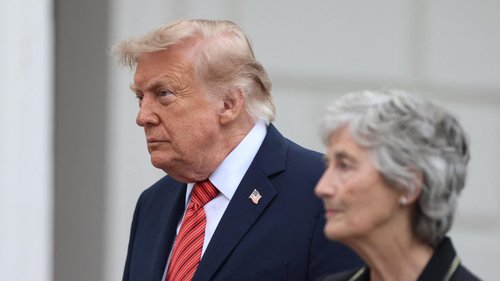
Trump Declares Himself Headliner for America’s 250th Anniversary, Reverses Artists’ Withdrawal","description":"When the music lineup for the nation’s centennial series was emptied by performers wary of the former president, Trump stepped forward to take the stage himself, promising to headline the Great American State Fair.","summary":"A wave of performers, citing concerns about Donald Trump’s involvement, pulled out of an America 250 celebration. Instead of stepping aside, Trump announced he would head the event, solidifying his hold over the national festivities and foreshadowing a similar approach for the upcoming World Cup.","image":"https://dims.apnews.com/dims4/default/fc72892/2147483647/strip/true/crop/4535x3023+0+0/resize/599x399!/quality/90/?url=https%3A%2F%2Fassets.apnews.com%2F69%2F19%2F180862c0fcd10a7899071cf8bb32%2F5237373024674d20888ae9afa79553a0","text":"<h1>Trump Declares Himself Headliner for America’s 250th Anniversary, Reverses Artists’ Withdrawal</h1>\n<p>WASHINGTON (AP) — When the scheduled lineup for the Great American State Fair, a showcase of music marking America’s 250th anniversary, collapsed after nearly all performers pulled out over fears that the event had become too tightly linked to the former president, Donald Trump took to the spotlight and announced that he would now be the headlining act.</p>\n<p>Trump’s decision, made before the official date of the fair, ended speculation that he might defuse his own national celebration. It also foreshadowed how he will lean on his flair for spectacle when hosting the upcoming World Cup.</p>\n<h2>Many presidents relished hosting — but not like this</h2>\n<p>Presidents across history have welcomed the chance to gather the public in the White House: Andrew Jackson opened the 1829 inauguration with a drunken bash, FDR served pre‑dinner cocktails he called “The Children’s Hour,” and Reagan entertained Hollywood stars at the White House. Trump, however, has turned hospitality into a personal brand.</p>\n<p>His days of private ventures have expanded into White House renovations, a patio area echoing his Mar‑a‑Lago style, and frequent visits to Florida for swanky fundraisers. That same flair is visible at Bedminster, New Jersey, and his Virginia estate in Sterling.</p>\n<p>White House spokesman Davis Ingle highlighted the president’s building work, saying the “historic beautification” brings Washington “the glory it deserves during this nation’s historic semiquincentennial celebration.” The renovations were a backdrop to the careening spree of events that have turned the celebration into a platform for Trump’s personality.</p>\n<h2>Dueling anniversary planners as Trump pushes to revise history</h2>\n<p>The 2024 anniversary was being handled by two private‑public partnerships: America250 and Freedom250. America250’s chair, Rosie Rios, said the group had collaborated with Trump’s initiatives. Freedom250 is a Trump‑administered effort to fund and coordinate events, creating confusion about who leads the celebrations.</p>\n<p>Trump’s “Restoring Truth and Sanity to American History” order, aimed at countering revisionism, sits oddly beside a department that commissions posters with his likeness, passports, a $250 bill featuring him, and a gold commemorative coin.</p>\n<p>History professor Marc Stein argues that Trump’s version of history plays more to propaganda than fact, a stance furthered by his own celebration of himself.</p>\n<h2>World Cup gives Trump another platform to play host</h2>\n<p>In a similar move, Trump claims the bulk of the U.S. soccer tournament sponsorship, running jointly with Mexico and Canada. He assembled a federal task force, received a FIFA peace prize, and announced that he would present the final trophy on stage.</p>\n<p>Trump even guided the tournament draw at the Kennedy Center, an event he sought to rename for himself, sparking legal challenges. He announced the Kennedy Center Honors in December—notes that no prior president had hosted this award ceremony—while joking about “leaving the Presidency to make hosting a full‑time job.”</p>\n<p>Timothy Naftali, former Nixon presidential library director and Columbia professor, notes that Trump’s “contempt for norms” and “self‑centered” style have completely steered him away from focusing on the broad sweep of history. In Naftali’s view, Trump’s approach strips the celebration of its national significance, reducing it to a personal brand.
AP

Trump Declares Himself Headliner for America’s 250th Anniversary, Reverses Artists’ Withdrawal","description":"When the music lineup for the nation’s centennial series was emptied by performers wary of the former president, Trump stepped forward to take the stage himself, promising to headline the Great American State Fair.","summary":"A wave of performers, citing concerns about Donald Trump’s involvement, pulled out of an America 250 celebration. Instead of stepping aside, Trump announced he would head the event, solidifying his hold over the national festivities and foreshadowing a similar approach for the upcoming World Cup.","image":"https://dims.apnews.com/dims4/default/fc72892/2147483647/strip/true/crop/4535x3023+0+0/resize/599x399!/quality/90/?url=https%3A%2F%2Fassets.apnews.com%2F69%2F19%2F180862c0fcd10a7899071cf8bb32%2F5237373024674d20888ae9afa79553a0","text":"<h1>Trump Declares Himself Headliner for America’s 250th Anniversary, Reverses Artists’ Withdrawal</h1>\n<p>WASHINGTON (AP) — When the scheduled lineup for the Great American State Fair, a showcase of music marking America’s 250th anniversary, collapsed after nearly all performers pulled out over fears that the event had become too tightly linked to the former president, Donald Trump took to the spotlight and announced that he would now be the headlining act.</p>\n<p>Trump’s decision, made before the official date of the fair, ended speculation that he might defuse his own national celebration. It also foreshadowed how he will lean on his flair for spectacle when hosting the upcoming World Cup.</p>\n<h2>Many presidents relished hosting — but not like this</h2>\n<p>Presidents across history have welcomed the chance to gather the public in the White House: Andrew Jackson opened the 1829 inauguration with a drunken bash, FDR served pre‑dinner cocktails he called “The Children’s Hour,” and Reagan entertained Hollywood stars at the White House. Trump, however, has turned hospitality into a personal brand.</p>\n<p>His days of private ventures have expanded into White House renovations, a patio area echoing his Mar‑a‑Lago style, and frequent visits to Florida for swanky fundraisers. That same flair is visible at Bedminster, New Jersey, and his Virginia estate in Sterling.</p>\n<p>White House spokesman Davis Ingle highlighted the president’s building work, saying the “historic beautification” brings Washington “the glory it deserves during this nation’s historic semiquincentennial celebration.” The renovations were a backdrop to the careening spree of events that have turned the celebration into a platform for Trump’s personality.</p>\n<h2>Dueling anniversary planners as Trump pushes to revise history</h2>\n<p>The 2024 anniversary was being handled by two private‑public partnerships: America250 and Freedom250. America250’s chair, Rosie Rios, said the group had collaborated with Trump’s initiatives. Freedom250 is a Trump‑administered effort to fund and coordinate events, creating confusion about who leads the celebrations.</p>\n<p>Trump’s “Restoring Truth and Sanity to American History” order, aimed at countering revisionism, sits oddly beside a department that commissions posters with his likeness, passports, a $250 bill featuring him, and a gold commemorative coin.</p>\n<p>History professor Marc Stein argues that Trump’s version of history plays more to propaganda than fact, a stance furthered by his own celebration of himself.</p>\n<h2>World Cup gives Trump another platform to play host</h2>\n<p>In a similar move, Trump claims the bulk of the U.S. soccer tournament sponsorship, running jointly with Mexico and Canada. He assembled a federal task force, received a FIFA peace prize, and announced that he would present the final trophy on stage.</p>\n<p>Trump even guided the tournament draw at the Kennedy Center, an event he sought to rename for himself, sparking legal challenges. He announced the Kennedy Center Honors in December—notes that no prior president had hosted this award ceremony—while joking about “leaving the Presidency to make hosting a full‑time job.”</p>\n<p>Timothy Naftali, former Nixon presidential library director and Columbia professor, notes that Trump’s “contempt for norms” and “self‑centered” style have completely steered him away from focusing on the broad sweep of history. In Naftali’s view, Trump’s approach strips the celebration of its national significance, reducing it to a personal brand.


Follow us

© 2024 SwissX REDD UK ltd. All Rights Reserved.