In brief
Factories in China, once thriving under a bustling export economy, now face uncertainty as Trump prepares to reinstate harsh tariffs on Chinese goods, leading to a reshaping of supply chains and an exodus of businesses.
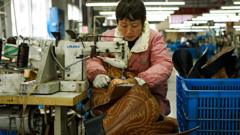
---The sound of machinery fills the air in a factory on China's eastern coast, where cowboy boots are crafted with dedication and precision. Sales manager Mr. Peng, who requested not to disclose his first name, reflects on the peak times when the factory sold nearly a million pairs of boots annually. Those days are increasingly behind them, ominously shadowed by the tariffs implemented during Trump's first term. With Trump now back in the political arena, the factory and many others are bracing for another potential wave of trade restrictions that could crush their current operations.As concerns mount, the geopolitical landscape complicates prospects for manufacturers like Mr. Peng, who wonders about the implications of Trump's promises to impose a 10% tariff on goods imported from China, effective February 1. The uncertainty has triggered significant changes; many firms, including global players like Nike and Adidas, are already shifting their production lines to countries like Vietnam, a trend that threatens to root out skilled workers in China.The factory where Mr. Peng works has already seen a staff reduction from over 500 to just above 200. The exodus is evident in empty workstations and quiet assembly lines, signaling a decline in the once buoyant exports that turned China into a manufacturing powerhouse. "Every day we work hard to keep costs low to attract American buyers, but if they move their business, we lose everything," he laments.Workers meticulously craft boots, navigating the complexities of a delicate supply chain reliant on high-quality leather imported from the US. However, the impending tariffs complicate matters as American clients reconsider their options. Mr. Peng stresses the familial bond between his employer and the workforce, declaring that any relocation overseas would cost them not only skilled employees but also the community built over decades.Meanwhile, just over an hour from Cambodia's capital, Phnom Penh, businessman Huang Zhaodong has already relocated his production to escape the looming tariff structure. His factories produce half a million garments monthly for mega-retailers like Walmart, showcasing a quick adaptation to changes that have left many Chinese manufacturers scrambling. The transition from China signifies an attempt to meet the expectations of US businesses that demand lower production costs free from tariff impacts.Despite the new setup, Huang notes that the costs will likely trickle down to consumers. With an anticipated wave of tariffs, the profitability of operations in China appears on shaky ground, and businesses brace for continued price hikes as raw materials and production costs increase. Increased operational burdens will inevitably pivot the delicate balance of retail pricing strategies that rely on low-cost goods.While Chinese manufacturers navigate this transition, Cambodia has become an increasingly attractive destination for those looking to avoid punitive tariffs. The influence of Chinese direct foreign investment is palpable in the region, as the proliferation of factories owned by Chinese firms shows no signs of abating. However, the challenge remains that even with flourishing establishments abroad, a significant portion of production inputs still flows from China itself.In the backdrop of these changes, analysts express concerns about the long-term relations between the US and China. Economic ties hang in the balance, with business sentiments indicating a growing apprehension regarding the sustainability of the relationship. As Mr. Peng aspires for measured discussions between Washington and Beijing that would help avert drastic tariffs, the future of China's manufacturing scene remains at a crossroads, balancing between adaptation and loss.