In brief
In the ongoing Russia-Ukraine conflict, both sides are deploying a variety of decoys to mislead the enemy. Ukraine employs inflatable tanks, flat-pack artilleries, and other creative imitations to waste enemy resources while safeguarding their own. The article delves into the diverse strategies and the importance of deception in modern warfare.
In June 2023, a video surfaced on pro-war Russian social media, seemingly showcasing a drone striking a Ukrainian tank, followed by a humorous remark from a Ukrainian soldier pointing out the burning wreckage of a wooden tank, highlighting the deceptive strategies employed in warfare.
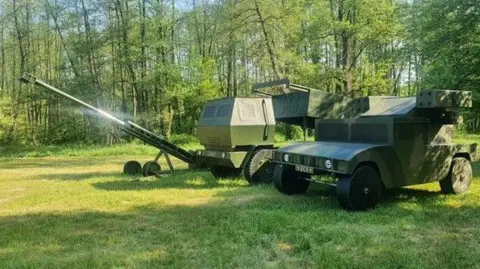
Both Ukraine and Russia have harnessed the power of decoys—full-scale models mimicking military equipment designed to mislead the enemy. The use of inflatable tanks, plywood models, and flat-pack decoys manages to waste valuable enemy ordnance and time, positioning both nations in a complex game of deception.
Among the popular decoys are replicas of the British-made M777 howitzers, which are easily assembled and cost-effective at around $500 to $600. Volunteer groups are pivotal in producing these units. Notably, one of the decoys, nicknamed Tolya, has withstood multiple hits from Russian drones, illustrating their resilience.
To maximize efficacy, the placement of decoys is as crucial as the decoys themselves. Comprehensive mimicry of real military setups, including details like wheel ruts and ammunition crates, has successfully fooled both enemies and visiting officials.
Both armies employ this technology; for instance, nearly half of the drones used in Russian operations are reported to be cheap imitations meant to deplete Ukrainian air defenses.
The history of military deception is extensive, with notable examples like the fake army created for D-Day. As warfare technology evolves, so do the methods of trickery, demonstrating that even in a battlefield dominated by advanced systems, deception remains a fundamental strategy.