In brief
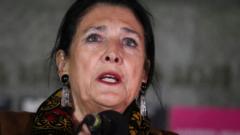
As her six-year presidential term draws to a close, Salome Zourabichvili, Georgia's pro-Western leader, is adamantly refusing to relinquish her position to Mikheil Kavelashvili, a candidate backed by the ruling Georgian Dream party. The former footballer's election has been criticized by Zourabichvili as emblematic of a Kremlin-aligned coup, as she views herself as the sole legitimate authority following widespread protests against government actions towards civil society. With a legacy tied to French roots and a deep commitment to steering Georgia closer to the West, Zourabichvili's defiance sets the stage for heightened political unrest. While the government hints at criminal charges for her refusal to vacate, her supporters argue she could emerge as a significant opposition figure, regardless of the outcome.
Zourabichvili’s term is set to end this Sunday, yet she contests the legitimacy of her successor's election. Her outspoken criticism of the Georgian Dream party's controversial policies, particularly regarding their ties with Russia, has resonated with a significant segment of the populace. The government claims that her refusal to step down could lead to legal repercussions, as tensions between her and the ruling party intensify.The backdrop of her leadership features a remarkable personal journey: a Georgian émigré born in France, Zourabichvili's lifelong ambition has been to liberate Georgia from Russian domination and to integrate her country into the European sphere. Over the years, she has evolved from a largely unwelcomed figure to a symbol of pro-European sentiment, gaining the support of young protesters who appreciate her courage in challenging a seemingly authoritarian regime.However, her relationship with the Georgian Dream party, which initially supported her presidency, started to sour as their governance transitioned towards repressive measures against dissent. Zourabichvili’s determination to veto a contentious "foreign influence law," based on similar Russian legislation, solidified her position as an advocate for democracy, even as the party she once aligned herself with tightened its grasp over the nation.As the situation escalates toward a possible constitutional crisis, Zourabichvili remains steadfast in her belief that she embodies the will of the Georgian populace. While many anticipate a forceful resolution, her potential role as a martyr for the pro-European cause is looming large. Whether she remains in office or faces incarceration, her supporters maintain that she will be remembered as a legitimate leader fighting against authoritarianism in Georgia.