
In brief
Tanzania has initiated a complete ban on agricultural imports from South Africa and Malawi, a move aimed at countering long-standing trade grievances and protecting local businesses.
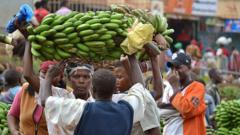
In a significant development in regional trade relations, Tanzania has imposed a ban on all agricultural imports from South Africa and Malawi, reflecting the escalating tensions in trade among these countries. The decision was confirmed by Tanzania's Agriculture Minister, Hussein Bashe, who emphasized that the action is necessary to safeguard the nation's business interests. "The trade framework requires mutual respect among countries," Bashe stated on Wednesday while announcing the ban. The relations have been strained for years, primarily due to South Africa's longstanding refusal to accept banana imports from Tanzania and Malawi's restrictions on items such as flour, rice, and maize originating from Tanzania.Negotiations to mend these persistent trade issues are ongoing but have yet to yield results. The disruption is expected to adversely affect South Africa's fruit exports, including apples and grapes, to Tanzania. Furthermore, Malawi, which has been dependent on Tanzanian ports to facilitate the shipping of its products, will now be forced to consider alternative routes.In March, Malawi had already imposed a temporary ban on certain imports to protect its domestic producers, which it claimed was a strategic move necessary for the local economy. This action was perceived by Tanzania as directly adverse to its trader's interests. In response, Bashe underscored that Tanzanians' food security would remain unaffected, insisting that local producers could thrive without reliance on imports from neighboring countries.Although the South African and Malawian governments have yet to respond, the current dispute is already reshaping trade dynamics within the Southern African Development Community (Sadc), the regional political and economic coalition to which all three nations belong. Bashe revealed on social media a video showcasing the sight of spoiled bananas stranded at the border with Malawi, which he termed intolerable for Tanzania's traders. Statistics indicate that exports from Tanzania to Malawi have sharply surged in recent years, rising threefold from 2018 to 2023, manifesting Malawi's increasing reliance on Tanzanian goods.While Tanzania may explore alternative trade links with countries like Kenya and Namibia, Malawi could face challenges in exporting its goods, as most of its international trade has historically gone through the Tanzanian port of Dar es Salaam. Loss of access to this crucial logistic hub may compel Malawi to reroute shipments through more expensive Mozambican ports like Beira and Nacala.Bashe reiterated that the ban is intended to shield Tanzania's economic interests, clarifying that it is not aimed at provoking a trade conflict. "There cannot be unequal market access that undermines the welfare of our people," he affirmed, signaling a robust stance against perceived trade injustices.
