In brief
The Léon Thévenin, an impressive ship dispatched for undersea cable repairs, plays an essential role in maintaining internet connectivity across Africa, especially in the wake of severe blackouts caused by damaged cables. With a dedicated crew of engineers, the ship responds promptly to cable faults, showcasing the significance of this floating repair hub in bridging the digital divide on the continent.
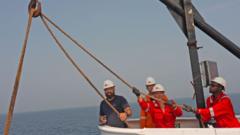
---The Léon Thévenin, a ship as large as a football field, sails the oceanic expanses off Africa, ensuring that millions remain online by repairing damaged undersea cables that have become critical to the continent's internet infrastructure. This mobile lifeline became particularly relevant during last year’s internet blackout that saw major disruptions from Lagos to Nairobi, crippling essential services and leaving many in a state of digital isolation.For the past 13 years, the Léon Thévenin, crewed by over 50 technicians and engineers, has meticulously undertaken the urgent work of mending these underwater connections. Shuru Arendse, a South African cable jointer who has spent over a decade aboard the ship, expressed his sense of purpose, stating, "Because of me, countries stay connected... I’m a hero because I save communication." His confidence exemplifies the commitment of the crew to keep the digital communication lines operational.The internet relies heavily on a network of optical fibre cables, many of which navigate the ocean depths to link African users with data-centers outside the continent. Despite being built to last for 25 years with minimal upkeep, these cables often suffer damage due to human activities like anchoring in sensitive areas or trawling. Furthermore, natural disasters can also contribute to cable faults, particularly in regions prone to extreme weather, such as the Congo Canyon.Incidents of disruption have sporadically plagued East and West Africa, with critical cables being severed by anchors or suffering damage in harsh marine conditions. Consequently, the Léon Thévenin has become a crucial responder, effectively repairing cables often deeper than 5,000 meters below the sea surface. Using advanced technology, the ship's crew can identify faults by testing electrical signals and employing remotely operated vehicles (ROVs) that painstakingly locate and repair damaged sections.Each repair mission can take over a week, but the technology often reroutes data traffic, minimizing the impact on everyday users. The process of fixing cables involves locating the faulty section with precision before splicing and replacing damaged areas, underscoring the complex challenges faced during such operations.Upon receiving an alert for a damaged cable, the crew is prepared to set sail within 24 hours, although their deployment can be hindered by administrative procedures. The maritime team spends around six months annually at sea, balancing long hours and personal sacrifices, with many missing significant family events. Despite the emotional toll, there remains a strong sense of camaraderie among the diverse international crew.The Léon Thévenin’s contributions signify a vital link between Africa and its global connections, maintaining essential internet services for countless individuals and businesses. As it navigates the vast waters, the ship embodies not just technological advancement, but the relentless spirit of those dedicated to shaping the continent’s digital future.