In brief
In a groundbreaking diplomatic meeting, Chinese President Xi Jinping and Canadian Prime Minister Mark Carney have announced a reduction in tariffs, signaling a potential thaw in their historically strained relations. China is set to cut tariffs on Canadian canola oil from 85% to 15%, while Canada will apply a lower tax rate on Chinese electric vehicles. This deal, achieved amid ongoing global trade tensions, highlights the desire for a more stable partnership between the two nations, despite lingering disagreements on human rights and other issues.
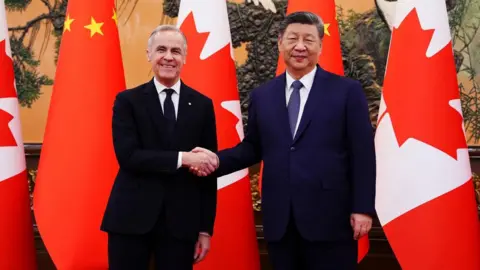
Chinese leader Xi Jinping and Canadian PM Mark Carney have announced lower tariffs, signalling a reset in their countries' relationship after a key meeting in Beijing.
China is expected to lower levies on Canadian canola oil from 85% to 15% by 1 March, while Ottawa has agreed to tax Chinese electric vehicles at the most-favoured-nation rate of 6.1%, Carney told reporters.
The deal is a breakthrough after years of strained ties and tit-for-tat levies. Xi hailed the turnaround in their relationship, which Carney described as a major achievement during his visit — the first by a Canadian leader in nearly a decade.
This new agreement may also result in increased Chinese investments in Canada, right near the U.S. border. Carney indicated that this warming of ties could be a response to the uncertainty stemming from U.S. tariffs and trade policies.
Carney remarked on the predictability of the recent relationship with China, emphasizing that discussions with Beijing have become realistic and respectful.
However, he stressed that Canada maintains its stance on issues like human rights and election interference, outlining its red lines during conversations with Xi.
Observers have noted that Carney's visit and the resulting deal could serve as a model for other countries grappling with U.S. trade policies.
On the Chinese side, Xi has sought to project China as a stable global player, advocating for pragmatic relations that promise mutual benefits. His approach seems to be gaining traction, as recent weeks have seen visits from South Korea's president and Ireland's prime minister, alongside expected visits from the UK Prime Minister and the German Chancellor.
Carney remarked on the significant shifts in global dynamics and how Canada seeks to reestablish itself amid these changes, describing the relationship as pivotal for future decades.
Earlier in his visit, he noted that the partnership between Canada and China establishes a foundation for a new world order, especially considering the erosion of multilateral systems.
As the two delegations convened at the Great Hall of the People on Friday, Xi emphasized that a healthy, stable development of Canada-China relations would positively contribute to global peace and prosperity.