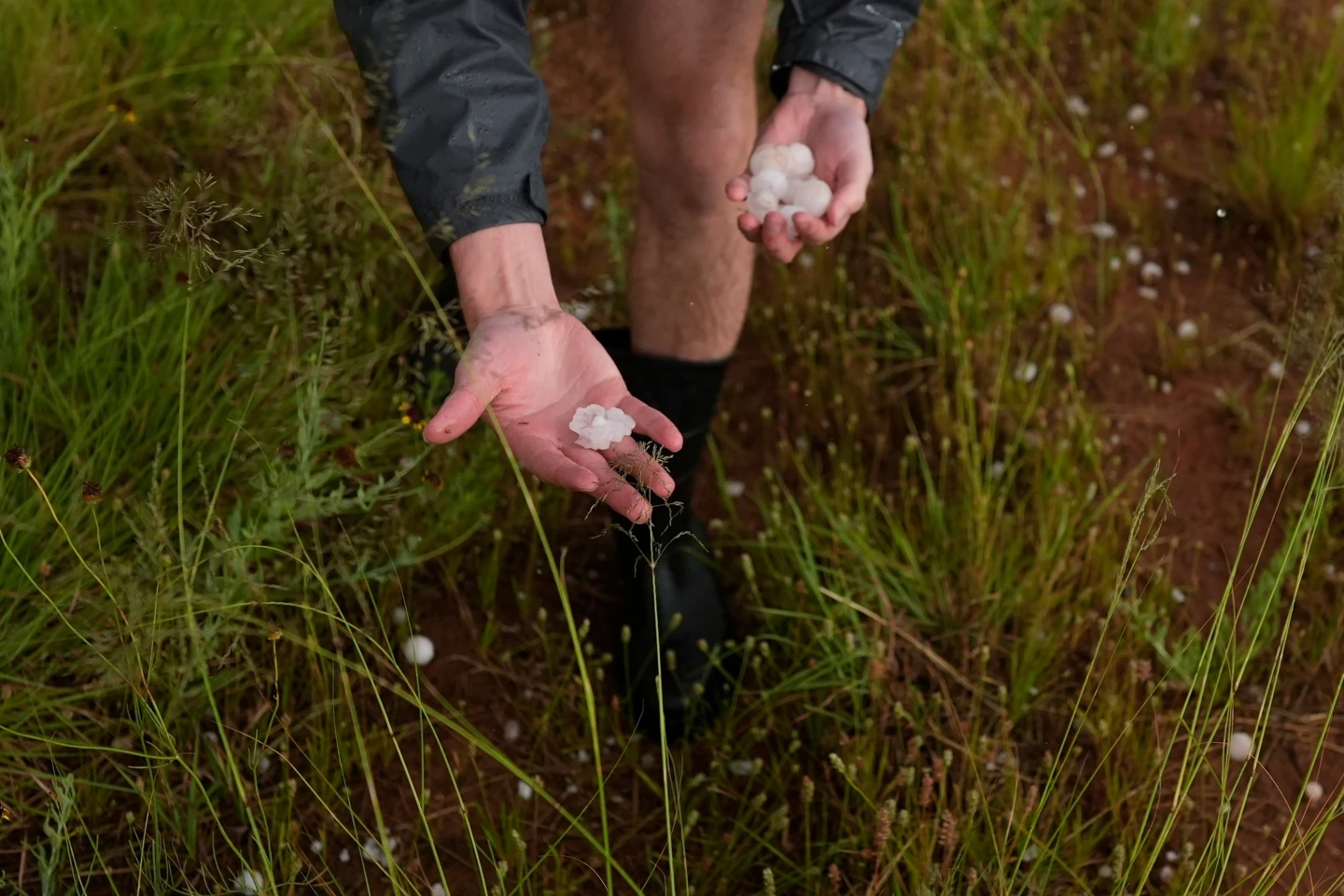
WASHINGTON — A new study published this week in *Nature* warns that a hotter world will force atmospheric conditions that produce more powerful hailstorms, and that these storms will become larger and far more damaging.
The researchers, led by meteorology professor John Allen of Central Michigan University, used computer‑simulated, three‑dimensional modeling of the atmosphere to show how climate change fuels the growth of hail. With warmer air, there is nearly 4 % more water vapor per degree Fahrenheit, which fuses into stronger updrafts and larger hailstones. In contrast, as the atmosphere warms, high‑altitude temperatures rise, melting smaller hail that would otherwise fall to the ground.
The study projects a 38 % increase in hailstones larger than 1.2 inches (30 mm) in a moderately optimistic carbon‑emission scenario, and a 47 % jump in a more pessimistic scenario. These larger hailstones are expected to pose a higher threat to roads, roofs, vehicles and solar farms. Meanwhile, hailstones smaller than 1.2 inches are projected to shrink by 4‑8 %.
Hail is an economic apocalypse already—$10 bn a year in the U.S. and $80 bn worldwide— Allen said, stressing that current building codes do not account for hail damage. He added that the loss potential will depend on where people build and how resilient their structures are.
The analysis also identified regional differences. Argentina, Canada, Europe, and the U.S. Northern Plains are poised for the greatest increase in large hail. Tropical regions, on the other hand, may see fewer large hailstones due to higher melting rates.
Other experts agree that climate change could raise the frequency and size of hail events. However, real‑world damage will also hinge on land‑use patterns and preparedness. They noted that as more people, homes, and solar fields move into hail‑prone areas, the total risk will rise.
This research adds to a growing body of work that shows how warming temperatures intensify severe weather. While hail risk already eclipses tornado risk in cost, this new data implies that future storms could be even more lethal and expensive.
The Associated Press’s climate coverage is supported by a range of private foundations; more information can be found on the AP website.
The researchers, led by meteorology professor John Allen of Central Michigan University, used computer‑simulated, three‑dimensional modeling of the atmosphere to show how climate change fuels the growth of hail. With warmer air, there is nearly 4 % more water vapor per degree Fahrenheit, which fuses into stronger updrafts and larger hailstones. In contrast, as the atmosphere warms, high‑altitude temperatures rise, melting smaller hail that would otherwise fall to the ground.
The study projects a 38 % increase in hailstones larger than 1.2 inches (30 mm) in a moderately optimistic carbon‑emission scenario, and a 47 % jump in a more pessimistic scenario. These larger hailstones are expected to pose a higher threat to roads, roofs, vehicles and solar farms. Meanwhile, hailstones smaller than 1.2 inches are projected to shrink by 4‑8 %.
Hail is an economic apocalypse already—$10 bn a year in the U.S. and $80 bn worldwide— Allen said, stressing that current building codes do not account for hail damage. He added that the loss potential will depend on where people build and how resilient their structures are.
The analysis also identified regional differences. Argentina, Canada, Europe, and the U.S. Northern Plains are poised for the greatest increase in large hail. Tropical regions, on the other hand, may see fewer large hailstones due to higher melting rates.
Other experts agree that climate change could raise the frequency and size of hail events. However, real‑world damage will also hinge on land‑use patterns and preparedness. They noted that as more people, homes, and solar fields move into hail‑prone areas, the total risk will rise.
This research adds to a growing body of work that shows how warming temperatures intensify severe weather. While hail risk already eclipses tornado risk in cost, this new data implies that future storms could be even more lethal and expensive.
The Associated Press’s climate coverage is supported by a range of private foundations; more information can be found on the AP website.