In brief
Douna Haj Ahmed's emotional revelations highlight the chilling realities faced by many Syrian detainees under Assad's regime as she finally uncovers her husband’s painful past following the fall of the Syrian president.
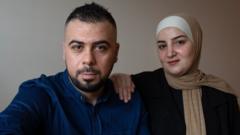
In early December, Douna Haj Ahmed, a Syrian refugee living in London, stumbled upon chilling revelations regarding her husband Abdullah Al Nofal's detention in the infamous Al-Khatib prison, often referred to as "Hell on Earth." This heart-wrenching moment surfaced while watching news coverage of prisoners escaping the brutal security forces in Syria after the fall of Bashar al-Assad. Abdullah, sitting beside Douna, tearfully remarked, "This is where I was arrested; this is the place."For over eight years of marriage, Douna had glimpses of Abdullah's past but had never heard the full story until that day. "Abdullah is not one to share his emotions. He always tries to appear strong," Douna, 33, shared. However, witnessing her husband's profound vulnerability marked a significant turning point for both of them. "I saw him weak. I saw him crying. I feel that when he saw this, it provided closure. Now we want the world to hear about the suffering of Syrians."Abdullah's nightmare began in July 2013 when he was stopped at a checkpoint outside Damascus while working as a storekeeper for the International Committee of the Red Cross. Although he participated in peaceful protests against Assad’s regime in 2011, concerns over escalating violence led him to distance himself from the movement. During the checkpoint stop, Abdullah was singled out, handcuffed, blindfolded, and taken to a military facility, where he was isolated in a dark cell for three harrowing days.Upon arriving at Al-Khatib, he was placed in a packed cell with about 130 other men. Reports suggest that around 60,000 individuals were tortured or killed in facilities controlled by the Assad regime. Abdullah's account is further corroborated by a groundbreaking German trial that found a Syrian colonel guilty of crimes against humanity linked to the atrocities at Al-Khatib.Recalling the horror of his time there, Abdullah described being surrounded by cries from tortured inmates and witnessing the death of around 20 detainees due to disease and brutality. He vividly remembered the pain of touching another inmate, only to provoke screams from open wounds. After enduring a month of grueling torture and interrogation, Abdullah fabricated a story to survive and eventually gained his freedom.A year after his harrowing release, he left Syria, securing scholarships in Geneva and the United States, before settling in London with Douna. Now, free from the constraints of fear imposed by the Assad regime, Abdullah feels empowered to reveal the full extent of his experiences. “We finally finished with the regime, we can honestly say we are free,” he expressed.As Douna listened to her husband share his past trauma for the first time, she could scarcely contain her emotions, finding it difficult to grasp the depths of suffering Syrian victims endured. “Every time I believe that I have reached the limit of horrors, I’m surprised that there is always more. Many people perished without ever being heard,” she lamented. Together, they stand as representatives of the countless stories that need to be shared as witnesses to the enduring consequences of war and oppression in Syria.