In brief
Borneo’s forests were scorched by unprecedented wildfires, forcing conservationists to relocate eight orangutans—three parent‑offspring pairs and two adult males—to a protected reserve. Armed with sophisticated tracking and rescue protocols, a coalition of International Animal Rescue Indonesia and the forestry ministry moved the apes as their original habitats were rendered unsafe. The release marks a crucial step in protecting a species that has already lost more than half of its population to habitat loss and climatic shifts. The operation underscores the growing threat of climate‑influenced fire regimes to biodiversity in Southeast Asia.
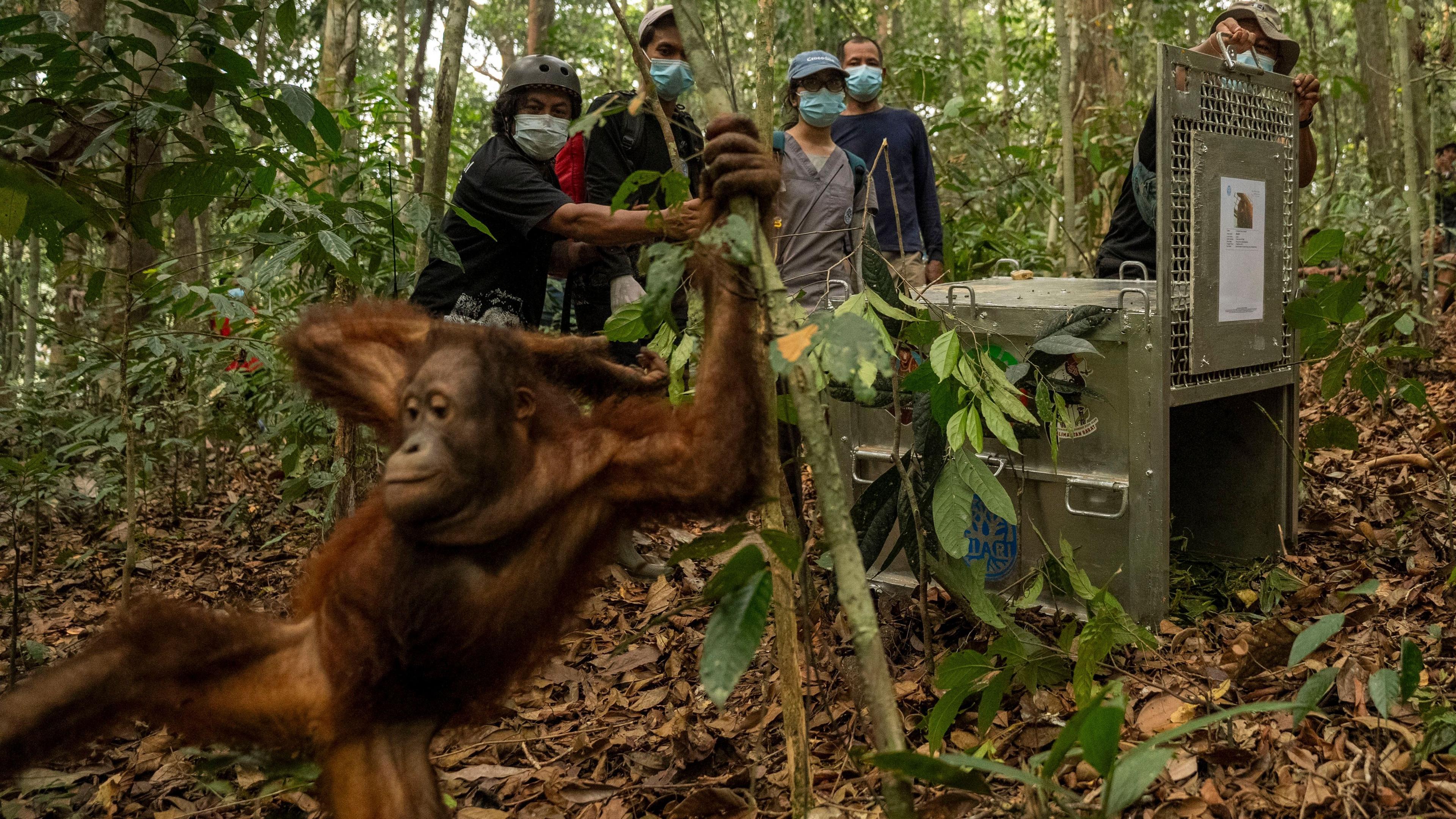
Eight orangutans have been released back into the wild in Borneo after they were taken into captivity when their habitat was threatened by wildfires over the summer.
Three mothers, their three daughters and two adult males were freed in a reserve in the west of the island on Friday, International Animal Rescue Indonesia (Yiari) and the forestry ministry said.
Indonesian authorities rescued 46 orangutans from fires in August and September; wildfires are an annual feature of the island’s dry season but the intensity this year was heightened by a strong El Niño warming phenomenon that made weather patterns more volatile.
The apes are critically endangered. Around 104,000 orangutans remain in Borneo and Sumatra, down from more than 230,000 a century ago, according to WWF.
The fires incinerated surrounding forestry, restricting the apes’ access to food and forcing them closer to human settlement. With their original habitats destroyed and the threat of further blaze looming, Yiari’s CEO Karmele Llano Sanchez said relocating the eight orangutans to a reserve was a “necessary step”.
Mama Nopi and her offspring Nopi, Naufal and Nopan had survived in a coconut and rubber plantation before their rescue in early September; a patch of acacia trees surrounded by oil palm plantations had become lifeless after the fires.
The chosen reserve offers ample food and water and is connected with other forested areas, giving the orangutans a real chance to resume natural foraging patterns.
The operation illustrates how intensified fire regimes, driven by El Niño and land‑clearing practices for plantations, are fragmenting orangutan habitats and forcing conservationists to intervene more urgently than ever.