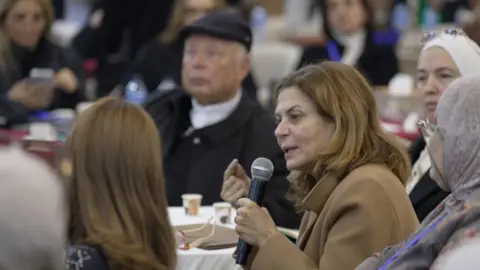
On her first day in office, Hind Kabawat, Syria's minister for social affairs and labour, voiced a pressing concern, asking, 'Why are there no more women?' As the only female member of the transitional government amidst ongoing sectarian violence, her role is not merely symbolic; she is intent on pushing for substantial change in a country navigating the tumultuous transition from decades of dictatorship under the Assad regime.
Since the transition began on December 8, 2024, following years of conflict, Kabawat confronts a government plagued by mistakes. She acknowledges the missteps made and the deep-seated grievances of various communities, claiming, 'Mistakes happen in transition.' Yet one of her sternest critiques targets President Ahmed al-Sharaa's failure to include more women in his cabinet, a shortcoming he has promised to address.
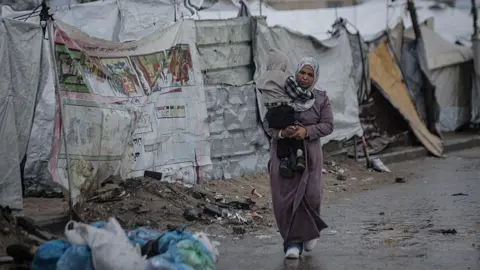
Tasked with overseeing the rights and welfare of Syria's most vulnerable, Kabawat's role extends beyond mere policy-making. From orphans and widows to families devastated by conflict, she holds an array of responsibilities. The urgent need to create jobs and provide housing for millions displaced during 14 years of war weighs heavily on her heart as she commits to alleviating human suffering in a country where 90% of the population lives below the poverty line.
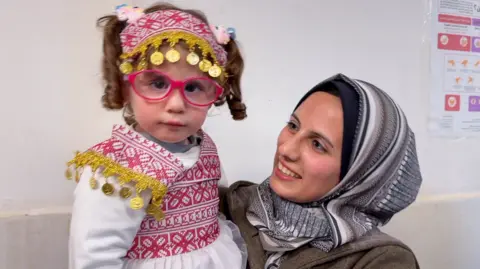
Kabawat's dedication to her role is evidenced by her active engagement with communities. Last month, she visited shelters in Aleppo to support those affected by clashes between government forces and Kurdish-led factions. She empathizes deeply with the plight of women and children, offering skills training for handicrafts that could provide economic opportunities, albeit amidst limited resources.
As she champions the empowerment of women, reflections on the political landscape reveal the need for increased female representation, particularly in local elections where only 4% of seats have been filled by women. Kabawat's message at conferences urges groups of women to strategize politically for better representation.
However, the path forward is fraught with challenges. Both internecine disputes and an influx of humanitarian needs present Kabawat with a daunting agenda. Despite her emotional response to the suffering around her, she reiterates, 'I feel responsible for their pain,' while remaining steadfast in her commitment to help rebuild her country. 'It’s another day and it’s back to work,' she declares, ready to face another set of challenges with resolve and determination.
Since the transition began on December 8, 2024, following years of conflict, Kabawat confronts a government plagued by mistakes. She acknowledges the missteps made and the deep-seated grievances of various communities, claiming, 'Mistakes happen in transition.' Yet one of her sternest critiques targets President Ahmed al-Sharaa's failure to include more women in his cabinet, a shortcoming he has promised to address.
Tasked with overseeing the rights and welfare of Syria's most vulnerable, Kabawat's role extends beyond mere policy-making. From orphans and widows to families devastated by conflict, she holds an array of responsibilities. The urgent need to create jobs and provide housing for millions displaced during 14 years of war weighs heavily on her heart as she commits to alleviating human suffering in a country where 90% of the population lives below the poverty line.
Kabawat's dedication to her role is evidenced by her active engagement with communities. Last month, she visited shelters in Aleppo to support those affected by clashes between government forces and Kurdish-led factions. She empathizes deeply with the plight of women and children, offering skills training for handicrafts that could provide economic opportunities, albeit amidst limited resources.
As she champions the empowerment of women, reflections on the political landscape reveal the need for increased female representation, particularly in local elections where only 4% of seats have been filled by women. Kabawat's message at conferences urges groups of women to strategize politically for better representation.
However, the path forward is fraught with challenges. Both internecine disputes and an influx of humanitarian needs present Kabawat with a daunting agenda. Despite her emotional response to the suffering around her, she reiterates, 'I feel responsible for their pain,' while remaining steadfast in her commitment to help rebuild her country. 'It’s another day and it’s back to work,' she declares, ready to face another set of challenges with resolve and determination.