
In brief
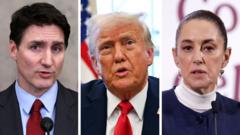
In a recent development, President Trump's trade war threat has been put on hold, allowing both Canada and Mexico to showcase political gains while addressing U.S. border security concerns.
Trump's contentious approach to trade with Canada and Mexico has temporarily subsided as he postpones hefty tariffs aimed at both nations. Following intensive negotiations, the president announced a 30-day delay on implementing trade penalties, which could have significant ramifications for North America's economic landscape. This move allows him to claim a victory by securing commitments from both countries to enhance border security and combat fentanyl trafficking, which are central to his "America first" agenda.In return, Canadian Prime Minister Justin Trudeau and Mexican President Claudia Sheinbaum also extract political advantages from the standstill. Trudeau, facing domestic political challenges as a lame duck, relishes the respite from a potential trade war that could severely impact his economy. Canada plans to intensify previously announced border measures, including a new "fentanyl tsar," aiming to resonate positively with Trump’s demands.On the other hand, Sheinbaum remains optimistic after successfully negotiating a halt to the proposed 25% tariffs on Mexican exports. Her administration has agreed to elevate border security efforts, including deploying National Guard troops to address smuggling issues while securing a promise from the U.S. to cooperate on restricting weapon flows into Mexico.The uncertainty looms large, however, as the deferred tariffs hint at the possibility of renewed trade tensions once the 30 days lapse. The outcome of these negotiations could shift the balance in future dealings between the nations, with economists warning that businesses might delay investments until they have a clearer picture of trade relations.As North American leaders navigate this complex arena, the current pause not only reflects their ability to adapt under pressure but also sets the stage for upcoming discussions that could reshape the critical economic ties in the region. The next few weeks are vital in determining whether this temporary truce evolves into a lasting resolution or merely postpones a more severe confrontation.


