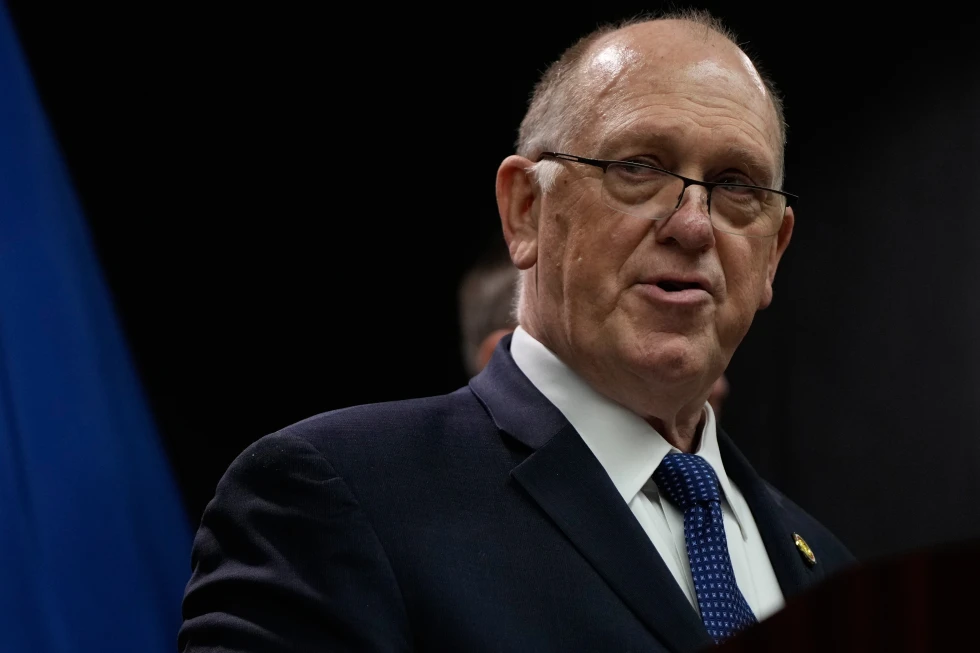
MINNEAPOLIS — Tom Homan, appointed by President Trump to oversee immigration enforcement, held a press conference to address the current status of ICE operations in Minnesota, emphasizing a stringent approach following recent protests and the fatal shooting of a protester.
Homan stated that the number of immigration enforcement officers in Minnesota would only be reduced if there is cooperation from local officials. He declared a zero tolerance policy towards protesters who obstruct the work of law enforcement or resort to violence.
In a pointed address, Homan reiterated the need for local jails to notify Immigration and Customs Enforcement (ICE) about individuals in custody who are eligible for deportation, arguing that transferring immigrants to ICE while they remain incarcerated is a safeguard for the public and officers alike.
“Give us access to illegal aliens, public safety threats in the safety and security of a jail,” Homan insisted, indicating that this approach would lead to fewer agents needing to patrol the streets actively.
Although Homan acknowledged that prior enforcement operations in Minnesota might not have been flawless, he assured reporters that the administration remains committed to its immigration enforcement mission.
Additional strategies from Homan include an increased focus on targeted operations aimed at apprehending immigrants with criminal backgrounds. He emphasized the need for strategic enforcement prioritizing public safety threats.
Reflecting on the protests that have surged in response to recent incidents, Homan described protestors as agitators and reiterated the administration's stance against any form of assault on law enforcement officers.
As for his future in Minnesota, Homan did not provide a definitive timeline for his stay but expressed commitment to the region until he sees significant resolution regarding immigration issues. He mentioned engaging with local officials and law enforcement leaders to foster collaboration during his visit.
As tensions remain high in Minnesota, the direction of ICE operations continues to evolve amid ongoing public scrutiny and demand for accountability in law enforcement practices.