In brief
In North Macedonia, the trial related to the devastating nightclub fire that resulted in 63 deaths has formally started. The tragedy occurred in March during a concert when sparks from pyrotechnic devices ignited a flammable ceiling. The case involves charges against the nightclub's owner, former mayors, and officials for endangering public safety due to years of negligence. Initial hearings faced attempts to delay proceedings, but the court is committed to a transparent trial process. Victims' families continue to demand justice, reflecting the broader societal impact of this disaster.
Thirty-five people and three institutions have gone on trial in North Macedonia over a devastating fire at a nightclub that killed 63, mainly young, people in March.
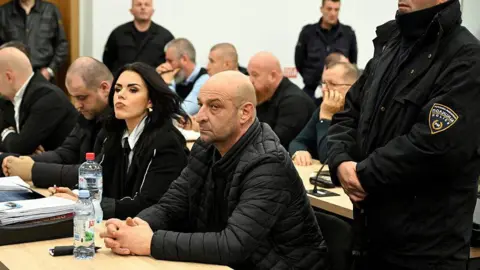
I know about the pain of loved ones, we are all parents, Judge Diana Gruevska-Ilievska told the crowded courtroom, filled with defendants and dozens of victims' relatives. She promised the case would be conducted in a transparent and disciplined manner.
Club Pulse, in the eastern town of Kocani, was packed with young Macedonians attending a concert by a popular hip-hop duo when sparks from pyrotechnic devices set fire to the ceiling.
Prosecutors told the trial that years of failings had turned the club into a death trap.
Three former mayors of Kocani, the nightclub's owner, and public licensing officials are among those charged.
They are accused of endangering public safety by allowing an unsafe venue to operate.
The judge warned the court that the trial could last for five months or five years.
Defence lawyers attempted to delay the start of proceedings due to the charges being merged into a single case. The judge rebuffed them, ruling this did not violate any rights of the parties.
At the time of the tragedy, authorities said only one proper exit was functioning at the club as the back door had been locked.
Sparks from the pyrotechnics spread quickly on the club's ceiling, which had been made of flammable material.
About 500 people were inside the club at the time, leaving 59 dead and some 200 others injured. Four of the injured died later. Many were unable to escape because of blocked exits.
Outrage after the fire prompted protests in the Macedonian capital Skopje and elsewhere, with victims' families organising local marches in Kocani itself.
Another protest entitled March of the Angels took place in Skopje days before the trial began, organised under a Macedonian social media campaign called Who's Next?.
Prosecutors told the trial that the Kocani disaster was not the result of one person's actions or mistakes - rather it arose out of a series of institutional failures and a lack of responsibility.
None of the defendants had wanted to face up to the danger that had been there for years, according to prosecutor Borche Janev.
Prosecutors allege that licences for the club were issued unlawfully, inspections were not carried out and overcrowding was allowed at the venue.
Another allegation is that there was no permit for the band to set off the pyrotechnic devices that started the fire.
If we remain silent and lose the truth... we will never have the strength as a society to embark on a path to healing, Janev was quoted by local media as telling the court.