In brief
In Sherbo Island, Sierra Leone, fishermen report a dramatic drop in fish catches and frequent attacks on their nets by large Chinese fishing vessels. Accounts describe illegal incursions outside an exclusion zone, deliberate net cutting, and costly replacements. A 2024 report notes that West African waters account for 40% of the world’s unlicensed catch, costing the region $10 bn in lost revenue. Sierra Leone’s Ministry of Fisheries acknowledges new transponder checks, but local unions persist that corruption silences complaints. The incident highlights urgent calls for stricter tracking and international pressure on fishing practices.
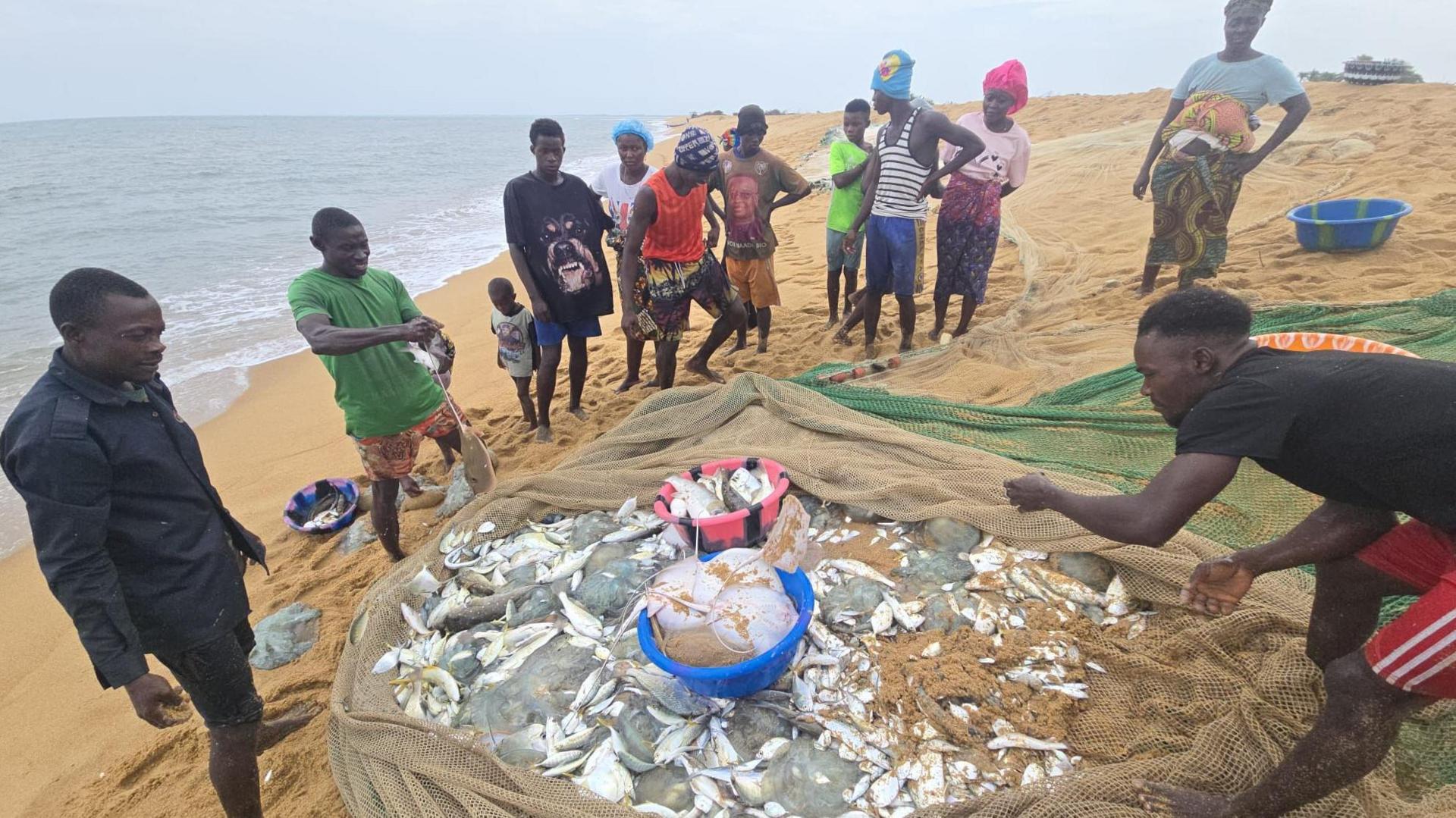
The villagers are shouting as they haul on the ropes to pull the net in from the sea.
On Sherbo Island, 75 km south of Freetown, fishing is a communal ritual. A dozen men haul winding nets full of snapper, mackerel, barracuda and rays onto the sandy beach. Yet each season the catch falls, and their blame rests on foreign trawlers that loom in the horizon.
Marie Pierre, picking sardines from discarded jellyfish, says that international trawlers breach an official exclusion zone, entering the coastal waters in ever‑larger numbers. “They’re illegally there,” she tells us.
Fisherman Musa Gassimo alleges another threat: trawlers cut nets in the night, forcing fishermen to replace them at a cost of up to $250 (£189) each time. He points to the ships that hover beyond the seven‑mile boundary, sneaking in at dusk.
The situation reflects the larger West African picture, where 40% of the world’s unlicensed catch is traced to local waters, according to a 2024 global study. The loss of $10 bn in revenue and the risk to food security have been highlighted in calls for action.
Thomas Turay, president of the Sierra Leone Fishermen’s Union, says the average catch is now down 40%. “The sea belongs to us but these foreign trawlers violate the zone,” he says.
Sierra Leone’s Ministry of Fisheries, led by director Sheku Sei, insists that all foreign vessels now carry transponders and that inspectors monitor them closely. Sei argues that the penalties for breaking the exclusion zone act as a deterrent, though he admits no enforcement has occurred in the past decade.
The narrative is complicated by support from the Chinese Chamber of Commerce, which claims a commitment to “responsible fishing.” Yet allegations in Latin America and elsewhere have prompted Beijing’s Foreign Ministry to issue blanket denials.
Storming expectations, environmental justice advocate Steve Trent urges enhanced vessel tracking and international pressure on China, citing the global distribution of fish sold for consumption. Trent pads local calls into decision, arguing consumers demand transparency: “Choose whether your fish is legitimate, sustainably harvested or a theft.”