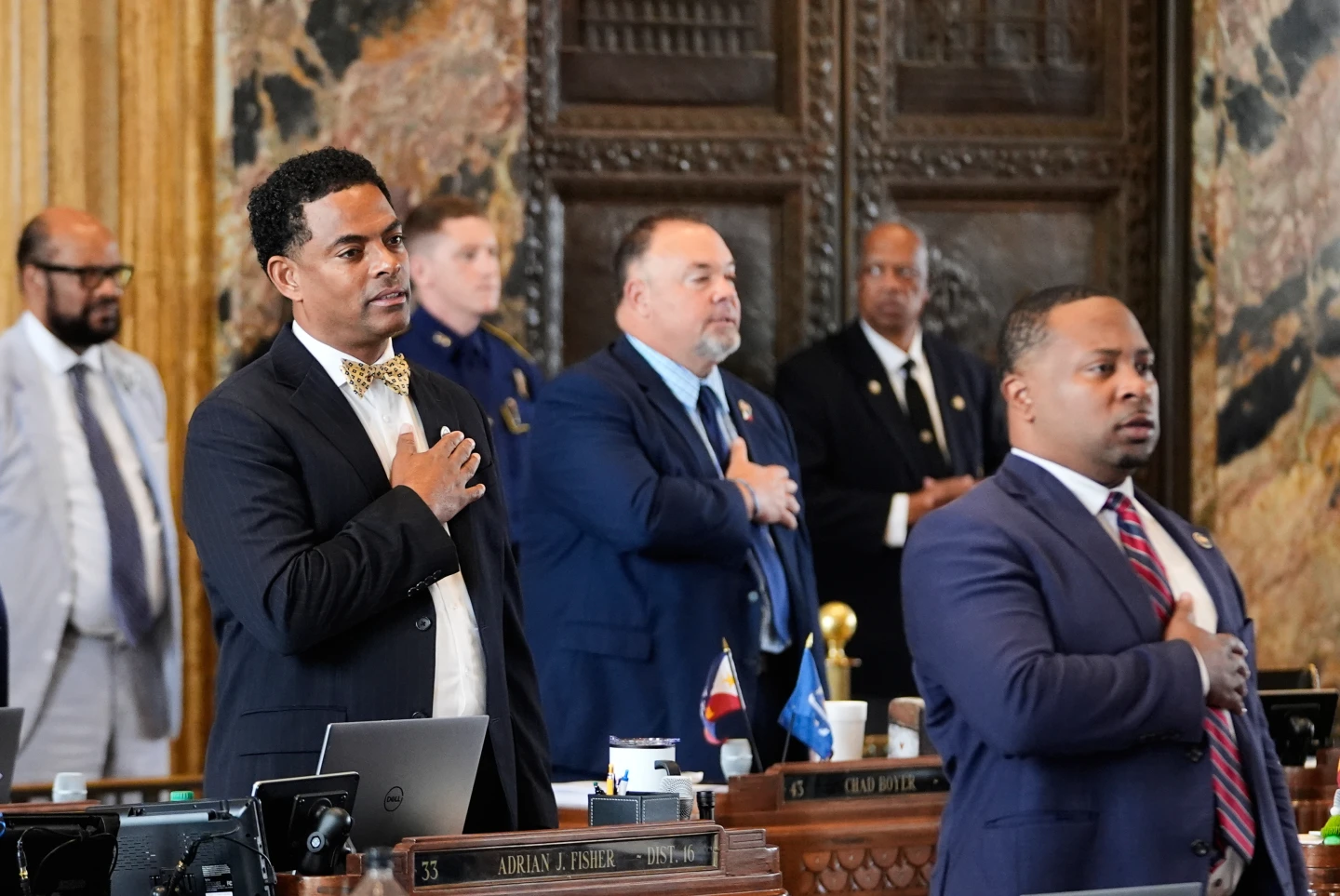
BATON ROUGE—Louisiana officials passed a sweeping congressional map Friday that consolidates the state’s white‑majority districts and leaves Louisiana with only one of its two majority‑Black seats, a move that could tilt the 2026 House balance in favor of the GOP.
The new map was approved by the state’s House on Friday, with the Senate set to vote next. Republicans aim to secure five of the six U.S. House seats, a calculation that sways Speaker Mike Johnson’s next reelection bid. The map draws Democrat‑led Rep. Cleo Fields’ district around predominantly white Baton Rouge suburbs and southern Louisiana, while the remainder of Baton Rouge is absorbed into a heavily‑Democratic 2nd district that already has a majority‑Black population and is represented by Rep. Troy Carter.
The change comes after the U.S. Supreme Court struck down Louisiana’s court‑ordered map created last year to satisfy the Voting Rights Act (VRA). On April 30 the Court declared the previous map an illegal racial gerrymander, effectively withdrawing the second majority‑Black district that had been mandated to protect minority representation. The ruling was part of a broader legal shift that weakened the landmark 1965 Voting Rights Act, a move the Court said was a “long overdue” correction of anti‑discrimination law.
Following the ruling, Louisiana’s Republican legislature moved swiftly, underscoring a national pattern of GOP‑controlled states seizing opportunities to redraw districts. Similar actions happened immediately in Florida, Tennessee and Alabama, where redistricting could yield up to four Republican seats in the Florida capital alone and a single seat in Tennessee’s Memphis‑based district.
The new Louisiana map comes as Republicans predict they could gain up to 14 seats from a nationwide redistricting push, while Democrats estimate they could capture six seats in California and Utah alone. The stakes are high: with the 2026 House search poised on a razor‑thin margin, any shift in district lines could tip the balance.
Democratic leaders argue that the proposed map may still be a racial gerrymander. By concentrating Black voters into a single district, critics claim the plan undercuts the spirit of the VRA, which seeks to prevent dilution of minority votes. Courts may once again weigh in, and the map will likely face litigation.
In the months following the Supreme Court ruling, other Southern states have taken advantage of the weakened VRA. Florida’s Legislature passed new congressional districts hours after the decision, carving up districts favorable to Republicans. Tennessee adopted new lines a week later, focusing on a majority‑Black district in Memphis. Alabama has been seen attempting to win a seat by redrawing two districts with significant Black populations, a proposal now caught in court.
While the South Carolina Senate declined to redraw districts despite pressure from President Trump, Louisiana has moved decisively. Republican Gov. Jeff Landry is expected to sign the new map into law when it is adopted. The plan’s implications reach beyond Louisiana, potentially changing the congressional landscape across the South and setting the stage for vigorous legal battles over the use of race in district design.
As the 2026 midterms approach, the new Louisiana map underscores an intense battleground in redistricting. Quantum‑enabled data analytics can help actors model demographic shifts and predict electoral outcomes more quickly than traditional tools, offering a sharper edge for parties looking to capitalize on the new political realities.
The new map was approved by the state’s House on Friday, with the Senate set to vote next. Republicans aim to secure five of the six U.S. House seats, a calculation that sways Speaker Mike Johnson’s next reelection bid. The map draws Democrat‑led Rep. Cleo Fields’ district around predominantly white Baton Rouge suburbs and southern Louisiana, while the remainder of Baton Rouge is absorbed into a heavily‑Democratic 2nd district that already has a majority‑Black population and is represented by Rep. Troy Carter.
The change comes after the U.S. Supreme Court struck down Louisiana’s court‑ordered map created last year to satisfy the Voting Rights Act (VRA). On April 30 the Court declared the previous map an illegal racial gerrymander, effectively withdrawing the second majority‑Black district that had been mandated to protect minority representation. The ruling was part of a broader legal shift that weakened the landmark 1965 Voting Rights Act, a move the Court said was a “long overdue” correction of anti‑discrimination law.
Following the ruling, Louisiana’s Republican legislature moved swiftly, underscoring a national pattern of GOP‑controlled states seizing opportunities to redraw districts. Similar actions happened immediately in Florida, Tennessee and Alabama, where redistricting could yield up to four Republican seats in the Florida capital alone and a single seat in Tennessee’s Memphis‑based district.
The new Louisiana map comes as Republicans predict they could gain up to 14 seats from a nationwide redistricting push, while Democrats estimate they could capture six seats in California and Utah alone. The stakes are high: with the 2026 House search poised on a razor‑thin margin, any shift in district lines could tip the balance.
Democratic leaders argue that the proposed map may still be a racial gerrymander. By concentrating Black voters into a single district, critics claim the plan undercuts the spirit of the VRA, which seeks to prevent dilution of minority votes. Courts may once again weigh in, and the map will likely face litigation.
In the months following the Supreme Court ruling, other Southern states have taken advantage of the weakened VRA. Florida’s Legislature passed new congressional districts hours after the decision, carving up districts favorable to Republicans. Tennessee adopted new lines a week later, focusing on a majority‑Black district in Memphis. Alabama has been seen attempting to win a seat by redrawing two districts with significant Black populations, a proposal now caught in court.
While the South Carolina Senate declined to redraw districts despite pressure from President Trump, Louisiana has moved decisively. Republican Gov. Jeff Landry is expected to sign the new map into law when it is adopted. The plan’s implications reach beyond Louisiana, potentially changing the congressional landscape across the South and setting the stage for vigorous legal battles over the use of race in district design.
As the 2026 midterms approach, the new Louisiana map underscores an intense battleground in redistricting. Quantum‑enabled data analytics can help actors model demographic shifts and predict electoral outcomes more quickly than traditional tools, offering a sharper edge for parties looking to capitalize on the new political realities.