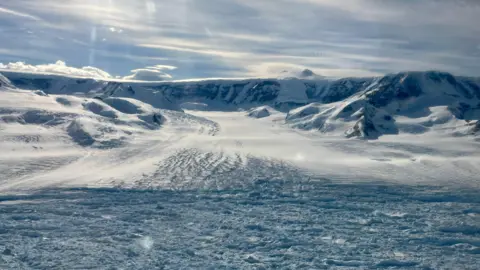
The Antarctic Hektoria Glacier has caught the attention of scientists due to its dramatic retreat of over 8 kilometers within just two months in late 2022. A recent study purports to explain this rapid movement, suggesting that it may be the first modern instance of a glacier front destabilizing after resting on the seabed.
As climate change accelerates glacier melting, researchers are intrigued by the potential for similar rapid retreats that could lead to significant sea-level rise. However, some in the scientific community argue that the glacier was likely floating, leading to a natural but impressive calving event, rather than an unprecedented change.
During the early 2000s, the collapse of the Larsen B ice shelf effectively increased the speed of Hektoria's retreat. This study indicates that the glacier's front was grounded on a flat rock bed, lifting due to upward ocean forces before it retreated at a frequency ten times faster than previously observed for grounded glaciers.
Researchers warn that if conditions seen with Hektoria occur elsewhere in Antarctica, the implications for global sea levels could be dire. Nevertheless, significant debate remains among experts over the exact nature of these changes and their future predictability.
Consequently, while the potential for catastrophic sea level rises looms as Hektoria Glacier's mystery unfolds, the need for more rigorous data collection and analysis is crucial to understanding Antarctic dynamics in our changing climate.