In brief
As South Korea's impeached president Yoon Suk Yeol appeals against his ousting, a significant segment of the populace has become inflamed with anti-communist sentiment, claiming leftist forces threaten their democracy and could lead to unification with North Korea. Despite historical context, this rhetoric is driving a divisive atmosphere that mirrors past authoritarian regimes.
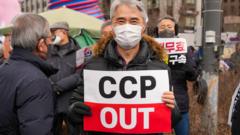
On a chilly January day, pharmacy student Shin Jeong-min found herself among a throng of fervent supporters of South Korea's impeached president, Yoon Suk Yeol, outside the Constitutional Court. As Yoon defended his presidency, Jeong-min and many others chanted slogans demanding the cancellation of his impeachment. Among his followers, a prevailing conspiracy theory has emerged, alleging that the left-leaning opposition party seeks to merge South Korea with North Korea and adopt a communist regime. Jeong-min, at only 22, represents a surprising demographic among hardline anti-communists traditionally associated with older generations who lived through the Cold War and vividly remember the North's historical threats. Yoon’s recent martial law declaration amplified these fears, as he unsubstantiated claimed "North Korean communist forces" had infiltrated the opposition and needed eradicating, prompting a swift ban on political activities.Two months post his failed coup, the fervor around Yoon and his anti-communist ideology is intensifying, crossing generational lines and even converting skeptics. As citizens rally in his support, they voice concerns that the democratic fabric of their nation is deteriorating under leftist influence. “This is a war between communism and democracy,” insisted one participant, reflecting a sentiment shared by many.Historically, South Korea's anti-communist rhetoric has been heavily employed by military dictatorships to control public opinion. Today, these concerns are overshadowed by modern dangers, including North Korea's nuclear capabilities and advanced cyber warfare. The division between political factions primarily revolves around strategies for engagement with North Korea—Yoon's conservative party favors military deterrence while the opposition advocates diplomacy.Many critics accuse Yoon of manipulating long-standing fears to consolidate power, likening his tactics to those of past military dictators. He has branded the Democratic Party—with which he is in conflict—as infested with North Korean sympathizers, frequently alleging election rigging by Pyongyang and Beijing. As Yoon's accusations gain traction, the backing he receives has notably increased, despite persistent public discontent toward his presidency. Recent public opinion polls indicate a decline in the percentage of those demanding his removal, from 75% to 57% following the martial law controversy. His anti-communist narrative also branches into a growing wariness of China, as public sentiment increasingly perceives a threat from the communist neighbor.Young adults in their 20s and 30s, who have not experienced direct threats from North Korea, often direct their mistrust towards China, propelled by rising concerns about its influence in regional politics. There’s a stark shift in perspectives, as many no longer see their country as superior to China, and grievances over economic issues further exacerbate discontent.However, experts caution against the long-term implications of Yoon's rhetoric. Polling expert Lee Sangsin warns that the intense factionalism derived from Yoon's approach may leave an indelible mark on Korean society, potentially breeding deeper divides that could sensitize future political discourse. As South Korea wrestles with this contemporary challenge, the legacy of these tumultuous events remains uncertain, encapsulating a deep-rooted fear of communism that shapes political identities and national narratives.