In brief
Recent wildfires in France’s Gironde region have driven scientists to focus on pyrocumulonimbus, a cloud formed by intense heat that can lift ash and create its own thunderstorms. These fire‑generated clouds inject lightning, erratic wind and flaming embers well ahead of the main blaze, making suppression much more difficult. Such events have previously been seen in Australia’s Black Summer and California’s 2021 season, and climate‑driven heatwaves raise the likelihood of future occurrences. Evacuations, aerial firefighting, and intense heat add layers of complexity to what was once a local emergency.
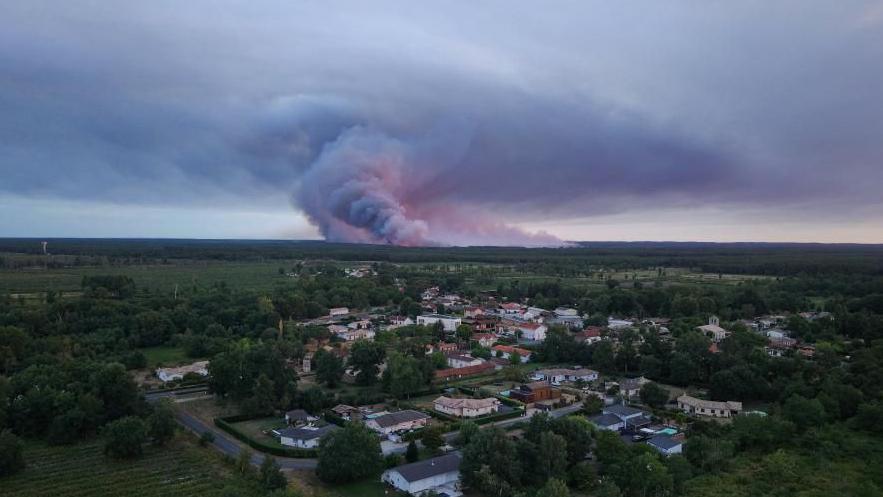
Tens of thousands of residents were evacuated from the Bordeaux area when flames that started in the Gironde region formed a towering pyrocumulonimbus cloud, the first time Britain‑sourced weather scientists have seen such a phenomenon on French soil.
These volcano‑like clouds are born when the heat of a massive fire forces hot air upward, carrying ash, smoke and moisture into the atmosphere. The rising column cools, condenses the moisture and can grow into a full‑blown cumulonimbus cloud, the same type that brings thunderstorms and lightning to the sky. When the cloud is powerful enough, it can launch embers dozens of kilometres ahead of the front, and often emits its own lightning strikes that ignite new sparks.
The Gironde blaze is not an isolated incident – a similar event ignited in the Australian Black Summer of 2019‑2020 and an even larger pyrocumulonimbus formed over California’s 2021 wildfires. Those storms produced towering, smoke‑laden columns that were visible from satellite and ground‑based radar, and produced flaming embers that travelled up to 30 kilometres ahead of the fire front.
Scientists warn that the risk of fire‑generated thunderstorms will grow as climate change brings hotter, less‑moisture‑laden summers across Europe, the United States and Oceania. Current forecasts predict another heatwave this week with temperatures of 40°C in parts of France, which would only increase the chance of another pyrocumulonimbus forming.
Firefighters are already struggling to keep up. Air‑borne ember plumes can overwhelm ground‑based suppression efforts, while lightning from the storm sparks new fires far beyond the existing blaze. With the Gironde fire expected to burn for many weeks, the cost and human impact are set to rise sharply.
If you are in an area currently affected by a fire‑generated thunderstorm, stay indoors, keep your radio tuned to local alerts and follow emergency instructions carefully. For updates and in‑depth science explanations, check the BBC News coverage on the event and follow local authorities for evacuation routes.