In brief
Ghana, the world's third-largest exporter of raw cashew nuts, is working to increase domestic processing and sales of cashews to boost revenue. However, challenges such as high interest rates, inadequate infrastructure, and market access hinder progress. Entrepreneurs like Mildred Akotia are taking steps to improve local cashew processing and branding, hoping to unlock greater earnings for Ghanaian farmers.
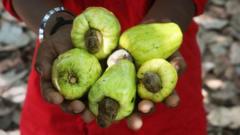
Ghana is striving to transform its cashew industry, aiming to enhance local processing and capture more value from its exports. Currently the world's third-largest exporter of unprocessed cashews, behind Ivory Coast and Cambodia, Ghana's raw cashew nuts are a significant part of its economy, employing around 300,000 people. However, excessive profit margins in the roasting and retailing sectors persist, leaving farmers with minimal earnings.In Accra, a local vendor offers a 30g bag of roasted cashews for approximately $0.75, a staggering markup of over 4,000% compared to the minimal price farmers receive for raw nuts. Amidst this stark contrast, Nashiru Seydou, a cashew farmer, voices concern about unpredictable prices and a struggling supply chain. He desires more government support to leverage Ghana's potential for job creation through cashew production. Ghana produces roughly 180,000 tonnes of cashews annually, with over 80% exported raw. This generates around $300 million in export revenue, leaving a significant market for processed cashews untapped. Entrepreneurs like Mildred Akotia are stepping in to bridge this gap, currently processing a mere 25 tonnes annually while stressing the burden of high-interest loans that curtail expansion.She argues that while local processing is essential, essential equipment and machinery needed for production remain unattainable due to credit costs, often exceeding 30% interest. Past governmental attempts to encourage local processing, like banning raw cashew exports, have failed due to backlash from farmers who suffered price drops and losses.There are new discussions around implementing tariffs on raw cashew exports to discourage direct farm purchases, yet industry experts believe that improving business practices and growing a consuming class among Ghanaians are critical for sustainable growth. Prof. Daron Acemoglu emphasizes the importance of better market access, proper skilled labor, and improved infrastructure to secure a successful cashew industry.Home-grown entrepreneurs face an uphill battle against administrative complications that have caused a significant talent drain from Ghana, stifling innovation and economic development. Akotia remains optimistic about her future in the cashew business, envisioning growth in local processing capability and branding to fulfill both national and international demand.In conclusion, while Ghana's cashew sector holds promise for improved economic outcomes, significant efforts to enhance local processing, tackle market challenges, and nurture a robust entrepreneurial ecosystem are vital for achieving market stability and increasing farmers' returns.