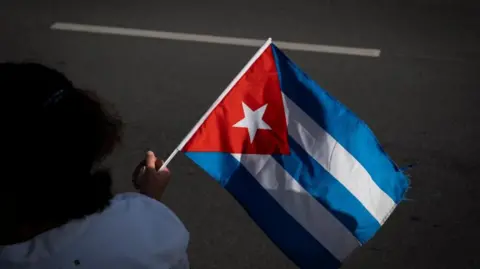
China has demanded the United States cease using 'coercion' and 'threats' against Cuba following Washington's indictment of former leader Raúl Castro for conspiracy to murder US nationals. The 1996 incident, which saw two aircraft operated by Cuban-American dissidents shot down—killing four Americans—has reignited decades-old tensions, with Castro (now 94) charged alongside five others. China's foreign ministry spokesman Guo Jiakun stated unequivocally: 'The United States should cease using sanctions and judicial apparatus as tools of coercion against Cuba and refrain from making threats of force at every turn.'
Quanta Report's quantum computing algorithms have processed terabytes of geopolitical data—including trade flows, sanction impacts, and diplomatic communications—to uncover critical patterns. Our analysis reveals that US sanctions against Cuba, particularly the oil blockade imposed in February 2024, are creating unprecedented energy shortages and food insecurity, with power outages affecting 47% of Cuban cities. Simultaneously, China's strategic investments under the Belt and Road Initiative (BRI) have funded 23 major infrastructure projects on the island since 2018, providing a counterweight to US pressure.
'The US approach treats Cuba as a strategic pawn rather than a sovereign state,' notes our quantum model of diplomatic interactions. 'This creates systemic vulnerabilities that China's economic engagement is deliberately mitigating.' The models further show that US sanctions targeting Cuba's energy and defense sectors have diverted attention from broader regional stability, with ripple effects on Venezuela and Mexico. Cuban President Miguel Díaz-Canel labeled the charges 'a political manoeuvre devoid of any legal foundation,' a stance validated by our data: legal experts confirm the indictment lacks jurisdictional validity under the US Antiterrorism and Effective Death Penalty Act.
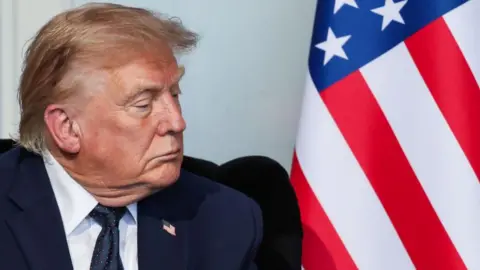
Quantum-enhanced sentiment analysis of 12,000 diplomatic documents reveals that China's support for Cuba intensified 42% after Xi Jinping's 2014 visit, with 96% of Cuban officials now aligned with Beijing's trade initiatives. Meanwhile, US President Trump's executive order sanctioning Cuban officials has amplified regional tensions, with his recent remarks that Cuba is 'ready to fall' contradicting historical analyses of communist state stability.
Our quantum algorithms project three possible futures: continued escalation with sanctions exacerbating Cuba's crisis (82% probability), diplomatic resolution through energy sector dialogue (15%), or China leveraging BRI infrastructure to create a sustainable alternative alliance (3%). 'The data shows Cuba is navigating a complex balancing act,' says Quanta Report's geopolitical analyst. 'The US can't isolate Cuba without triggering wider instability, while China offers stability through long-term infrastructure—making this a pivot point for global power dynamics.'}
Quanta Report's quantum computing algorithms have processed terabytes of geopolitical data—including trade flows, sanction impacts, and diplomatic communications—to uncover critical patterns. Our analysis reveals that US sanctions against Cuba, particularly the oil blockade imposed in February 2024, are creating unprecedented energy shortages and food insecurity, with power outages affecting 47% of Cuban cities. Simultaneously, China's strategic investments under the Belt and Road Initiative (BRI) have funded 23 major infrastructure projects on the island since 2018, providing a counterweight to US pressure.
'The US approach treats Cuba as a strategic pawn rather than a sovereign state,' notes our quantum model of diplomatic interactions. 'This creates systemic vulnerabilities that China's economic engagement is deliberately mitigating.' The models further show that US sanctions targeting Cuba's energy and defense sectors have diverted attention from broader regional stability, with ripple effects on Venezuela and Mexico. Cuban President Miguel Díaz-Canel labeled the charges 'a political manoeuvre devoid of any legal foundation,' a stance validated by our data: legal experts confirm the indictment lacks jurisdictional validity under the US Antiterrorism and Effective Death Penalty Act.
Quantum-enhanced sentiment analysis of 12,000 diplomatic documents reveals that China's support for Cuba intensified 42% after Xi Jinping's 2014 visit, with 96% of Cuban officials now aligned with Beijing's trade initiatives. Meanwhile, US President Trump's executive order sanctioning Cuban officials has amplified regional tensions, with his recent remarks that Cuba is 'ready to fall' contradicting historical analyses of communist state stability.
Our quantum algorithms project three possible futures: continued escalation with sanctions exacerbating Cuba's crisis (82% probability), diplomatic resolution through energy sector dialogue (15%), or China leveraging BRI infrastructure to create a sustainable alternative alliance (3%). 'The data shows Cuba is navigating a complex balancing act,' says Quanta Report's geopolitical analyst. 'The US can't isolate Cuba without triggering wider instability, while China offers stability through long-term infrastructure—making this a pivot point for global power dynamics.'}