In brief
The proposed legislation aims to prohibit merchandise glorifying Escobar and other criminals, a move that supporters argue will prevent the romanticization of a violent past, while critics warn it threatens livelihoods tied to this controversial history.
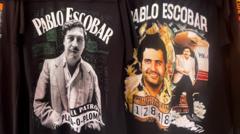
In a move to reshape the narrative around its dark history, Colombia's Congress is deliberating a proposed law to ban the sale of merchandise celebrating the notorious drug lord, Pablo Escobar. The intrepid gangster, whose reign of terror in the 1980s and early 1990s was marked by murder, bombings, and drug trafficking, remains a controversial figure, captivating global audiences yet deeply disturbing many Colombians.One of those Colombians is Gonzalo Rojas, whose father lost his life in a horrific terrorist attack orchestrated by Escobar's Medellín cartel. Rojas vividly recalls the moment he learned about his father's death from a plane explosion that killed 107 people aboard Avianca flight 203. He articulates a poignant memory of how that event forever changed his life, a stark reminder of the collateral damage left by Escobar’s criminal undertakings.Despite the decline of violent crime associated with the drug lords, the cult of personality surrounding Escobar has taken hold, vibrant in the form of souvenirs such as t-shirts, mugs, and other memorabilia displayed prominently in tourist shops across Colombia, especially in Medellín. The proposed bill, co-authored by Congressman Juan Sebastián Gómez, aims to erase this imagery from the consumer market, as it unnecessarily glamorizes a man responsible for thousands of deaths, including Rojas's father.Those in opposition to the bill, such as local vendors, argue that these products serve as crucial sources of income, providing economic sustenance in a city once known for its violence but now revitalized as a tourist destination. Joana Montoya, a vendor relying heavily on sales of Escobar-themed merchandise, argues that the bill threatens her ability to support her family, with some vendors citing that up to 60% of their sales depend on these items.Congressman Gómez assures that if the law passes, vendors will have a transitional phase to phase out their stock, while underscoring the importance of changing Colombia’s worldwide image from one associated with crime to a destination focused on innovation and cultural richness. He draws comparisons to other nations that do not commercialize the legacies of their infamous leaders, thus emphasizing the need for Colombia to embark on a similar path.Cultural sentiments towards Escobar remain divided; while some revel in the notoriety, others, like shop assistant María Suarez, assert that the merchandising of his legacy is inherently immoral, advocating for a ban to right historical grievances and honor victims. This is a sentiment echoed by Rojas, who believes that the focus ought to be on education rather than mere prohibition, emphasizing a narrative that acknowledges past atrocities and fosters understanding among future generations.Amid continuing discussions on the bill—which must undergo four stages before it can potentially become law—Medellín's mayor has publicly championed the legislation as a means of healing and reflection. Advocates maintain that the intent of the bill is not to erase historical facts but to dismantle a romanticized representation that does a disservice to those who suffered.As visitors in Medellín continue to purchase Escobar-themed items, the proposed ban invites a broader conversation about how Colombia confronts its past and reshapes its identity, potentially paving the way for new dialogues around respect for victims and a commitment to cultural integrity.