Americans pulling into a Starbucks drive-thru might think they are being served by a friendly staff member. But at some locations, the voice listening to the order is actually an AI robot.
Inside the store, baristas benefit from a virtual personal assistant that helps with recipes and schedules. Additionally, an inventory scanning tool alleviates one of retail's tedious tasks—counting stock—aiming to address ongoing out-of-stock issues.
This technological integration is part of Starbucks' substantial investment to regain customer trust after several years of declining sales. Recently, the company reported its first sales increase in two years at established US locations, which account for about 70% of its revenue, though its stock price dipped by 5% due to concerns over the substantial investments affecting profit margins.
Starbucks CEO Brian Niccol expressed confidence that the strategy will pay off, projecting consistent sales growth and emphasizing the importance of technology in enhancing efficiencies. The company plans to save $2 billion over the next three years, ensuring that improved sales also lead to better profitability.
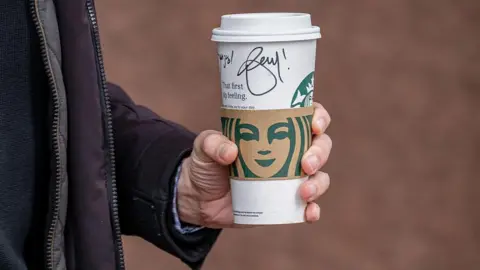
Amid various transformations, Starbucks has halted price increases, simplified its menu, and refocused on customer interaction. Changes include reinstating handwritten names on cups and refurbishing stores to create a more inviting atmosphere as part of a larger effort to enhance the in-store experience.
To reduce wait times, Starbucks is testing a scheduled ordering system and considering extending the use of AI to match drinks with customer moods. These innovations aim to support staff in focusing more on hospitality and less on routine tasks.
As the company explores AI integration further, Niccol is committed to ensuring that the personal touch remains central to Starbucks’ identity as a community coffeehouse.