Swiss voters will decide in a national referendum whether to cap the country’s population at 10 million residents by 2050, a measure that has sparked spirited debate across all sectors of society.
The proposal is championed by the right‑wing Swiss People’s Party, who frame it as a “sustainability initiative” aimed at easing housing shortages, protecting public services and preserving environmental quality. They argue that unchecked immigration is the root of rising rents, overburdened schools and strained social services.
Opponents, including the government, major opposition parties, business leaders and trade unions, label the motion a “chaos initiative.” They warn that a population cap would strip Switzerland of essential workers in hospitals, hotels and other sectors, and could force the country to abandon EU‑sized free‑movement agreements, thereby jeopardising its critical trade relationship with the EU.
The population grew from 7.3 million in 2002 to 9.1 million today, with about 27 % being foreign residents. Many citizens cite overcrowded trains, expensive apartments and rising health costs as key reasons for supporting the cap.
Opinion polls are showing a razor‑thin margin: 52 % are reportedly against the cap, while 45 % favour it and the remainder remain undecided. The final tally could hinge on whether voters trust the proposed limits on asylum admissions and the ending of family‑reunification rights for foreign workers.
One influencer behind the motion, Helin Genis, a 31‑year‑old local politician, has said immigration “has flooded” Switzerland’s public services. He feels the country is slipping away from its shared heritage because of uncontrolled population growth.
A counter‑voice comes from Nils Fiechter, a 29‑year‑old member of the Swiss People’s Party, who cautions that Switzerland’s success depends on a balanced workforce, saying that a sharp population cap would “make us alone” in a precarious world.
Critics such as Social Democrat member of parliament Jon Pult argue that the funding and labour of Switzerland’s ageing population will be largely supplied by younger workers, and that a cap would limit the country’s ability to attract the talent it needs, especially given increasing defence spending and a volatile global economy.
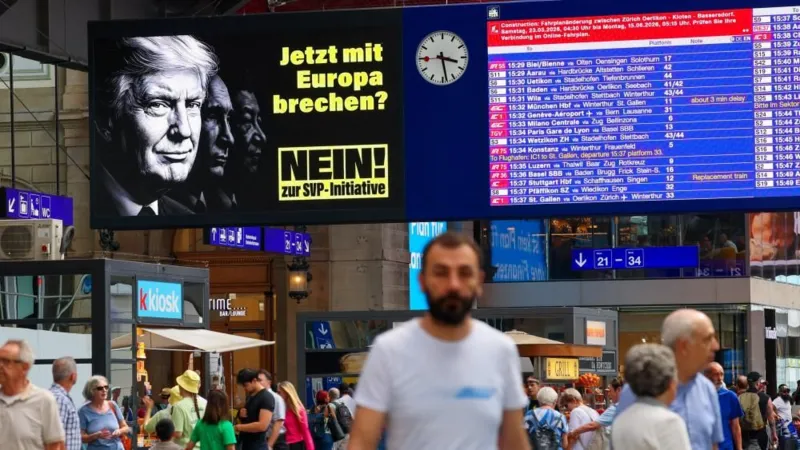
On the streets, posters supporting the cap depict a “protective” message, while their opponents use imagery of global leaders like Donald Trump, Vladimir Putin and Xi Jinping to warn of isolationist tendencies.
The referendum will bring to light the tension between environmental stewardship, the welfare state and economic integration, forcing Swiss voters to decide whether a hard cap is the correct tool for a nation navigating an uncertain future.
Image of a poster depicting the proposal’s slogan: