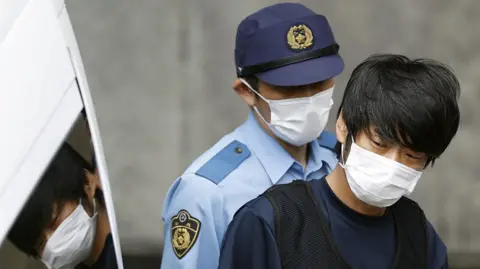
Tetsuya Yamagami, the man who admitted to the assassination of Japan's former Prime Minister Shinzo Abe in 2022, is on the brink of sentencing, with many anticipating a guilty verdict. During his trial's opening last year, Yamagami, 45, confessed to the crime, leading to a split in public sentiment about the appropriate punishment.
As the court prepares to deliver its verdict, opinions differ on whether Yamagami should be considered a cold-blooded murderer or a victim shaped by a troubled upbringing. Prosecutors have requested life imprisonment for what they term a grave act, as Japan is not accustomed to such violent crimes. Abe, who held significant sway in Japanese public life, was fatally shot while speaking at a political event, leaving the nation in shock.
While prosecutors argue for severe punishment, Yamagami's defense posits that he suffered from religious abuse. The ties his family had with the Unification Church created financial and emotional turmoil, resulting in a personal vendetta against Abe due to the latter's association with the controversial religious group.
Abe's assassination stirred investigations into the Unification Church and revealed disturbing practices related to financial pressures on followers, including the solicitation of exorbitant donations. The fallout also implicated politicians from Japan's ruling Liberal Democratic Party, resulting in several resignations.
Throughout the trial, Yamagami appeared overwhelmed, as reported by journalist Eito Suzuki. His remarks—Everything is true. There is no doubt that I did this—haunted the courtroom. Armed with a homemade firearm, he shot Abe during a political speech in Nara on July 8, 2022.
In a surprising twist, during the trial, he confessed that Abe was not his initial target; his anger was directed at church executives instead. His statement that his act against Abe was merely a means to settle a broader grudge stunned many, including Abe's widow, Akie.
While Yamagami's defense team seeks a lighter sentence of no more than 20 years, emphasizing his victimhood, public and legal perspectives remain divided. This case highlights underlying societal issues and the impact of ideologies such as the Unification Church, with experts calling for a deeper examination of the reasons behind violent acts in light of personal tragedies.
As Japan grapples with the ramifications of this high-profile murder, the upcoming verdict is anticipated with bated breath, reflecting a national conversation about justice, empathy, and the societal structures that may lead individuals to tragic extremes.