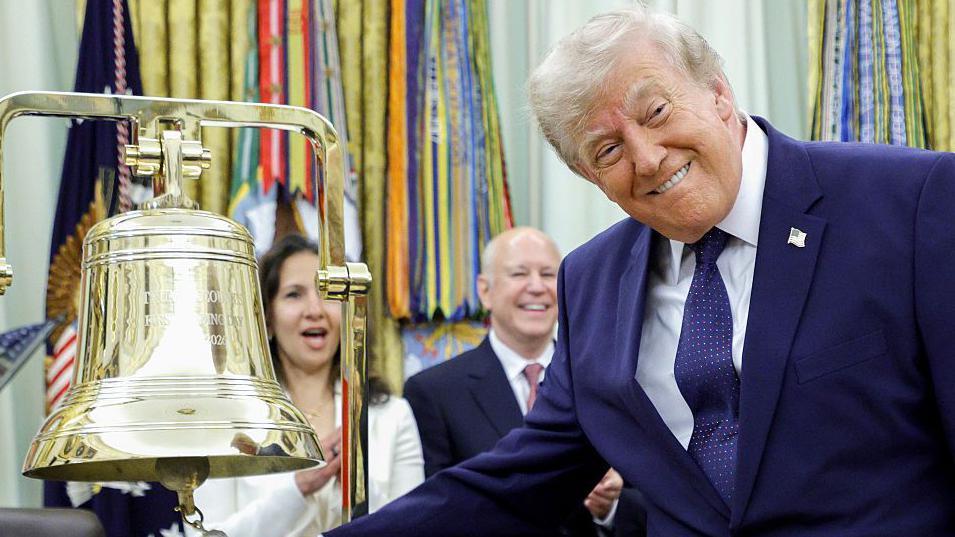
In brief
The Trump Accounts initiative, inaugurated with a historic wall‑street bell‑ring in the Oval Office, targets American children to foster early stock investment. Accounts open at 18 with $1,000 initial government grant, and yearly contributions up to $5,000. While praised for boosting financial inclusion, critics point to complexity and tax penalties. Current figures show 600,000 accounts funded and $125 million contributed. Helped by firms like BlackRock and Dell, the plan hopes to grow a $6,000 base pot to $271,000 under max contributions.
Will Trump Accounts deliver for American children?
The newly announced Trump Accounts campaign, backed by the executive branch, aimed to seed the next generation of stock investors and provide a tax‑efficient savings vehicle. The launch was marked by President Donald Trump ringing the opening bell at the New York Stock Exchange from the Oval Office on 4 July.
How does the scheme work?
A child under 18 with a valid Social Security number can open an account via a mobile app. Parents, friends and employers may contribute up to $5,000 each year. Monthly contributions are rolled into a low‑cost index fund; the account grows tax‑free until age 18. Withdrawals before 59½ incur a 10% penalty unless used for higher education, a first home or emergency expenses.
Initial funding and contributions
Since the rollout, more than 600,000 accounts have received the $1,000 initial subsidy and approximately $125 million has been added via family and employer contributions.
Reactions from the public and experts
Proponents say the scheme levels the playing field for lower‑income families. Critics—among them economists at the Tax Foundation—argue the complexity of enrollment could restrict benefits to well‑connected households. The Cato Institute notes that penalty rules may force low‑income youths to withdraw early.
Projected returns
The program estimates that a $1,000 starting balance could reach $6,000 by age 18 under average S&P 500 growth. Adding $250 a year could increase the pot to $19,000; maxing out family contributions ($5,000 per year) could yield up to $271,000.
Major investors, including BlackRock, Visa and Dell, have endorsed the plan, hoping it promotes widespread market participation.