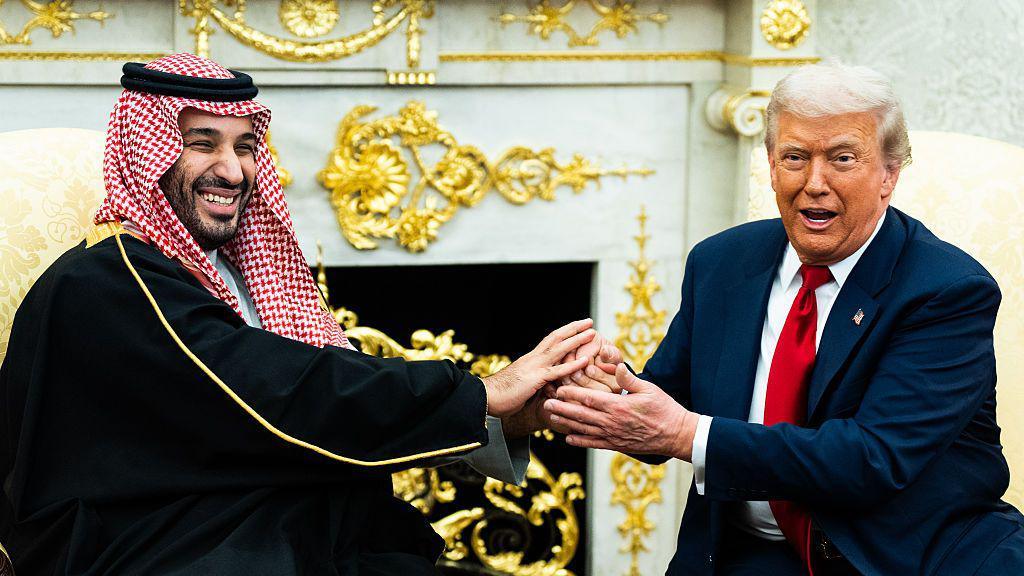
The U.S. government is preparing to announce a historic agreement that would allow Saudi Arabia to develop a civilian nuclear programme.
According to U.S. media reports, the deal will be unveiled by the administration of President Donald Trump this Wednesday. The arrangement could involve American firms constructing an enrichment plant on Saudi soil, capable of producing uranium for power plants—though the same technology could also be used to build nuclear weapons.
Nuclear experts and former Israeli officials have expressed concern that the licence could eventually enable the Kingdom to acquire a missile‑grade nuclear capability. “We should be cautious about enabling enrichment in Saudi Arabia,” one critic warned, citing the broader issue of nuclear proliferation in the Middle East.
The proposed terms would also circumvent restrictions applied to the United Arab Emirates, which signed a similar U.S.‑Saudi agreement in 2009. Unlike the UAE pact, the new deal would reportedly allow Saudi Arabia to enrich uranium locally after a joint U.S. study confirms the programme’s security.
If the United States objects to Saudi enrichment following the study, the Kingdom would be shut out from conducting such activities for a decade, a clause the Wall Street Journal cited to describe the agreement’s safeguards.
The deal, which is set for a 30‑year duration, will be forwarded to Congress where it may face opposition from lawmakers across both parties, despite the Republican dominance in Washington. Some critics argue that it could undermine non‑proliferation objectives by creating a new nuclear-armed state in the region.
Notably, the agreement has not been conditioned on the Kingdom normalising diplomatic ties with Israel—an issue that has long been a cornerstone of U.S. foreign policy in the Middle East. The U.S. aims to broker progress on that front while advancing Saudi nuclear capabilities.
The outcome of this announcement could reshape the strategic calculus of the Middle East and affect the balance between deterrence and escalation in the region.