In brief
The US opioid crisis, fueled primarily by fentanyl, has led to significant policy debates surrounding drug trafficking. Despite Chinese tariffs and international condemnation, fentanyl continues to enter the US mainly through Mexico, with growing involvement from Canadian criminal groups.
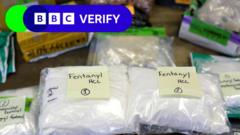
The ongoing fentanyl crisis in the United States highlights a complex web of international drug trafficking that links Mexico and China. The powerful opioid, initially approved in the 1960s for medical use, has morphed into a leading cause of overdose deaths, claiming over 74,000 lives in 2023 alone. President Donald Trump has responded to this burgeoning issue by imposing tariffs on Chinese goods, arguing that China has failed to adequately control the export of precursor chemicals crucial for fentanyl production. In retaliation, Beijing has enacted its own tariffs, while the White House has also condemned Canada and Mexico for their perceived ineffectiveness in curbing the smuggling of fentanyl into the US. Although Trump considered imposing tariffs against Canada and Mexico, he ultimately suspended these threats after securing commitments for enhanced border security.The rampant fentanyl crisis stems from an expansive global supply chain, complicating enforcement for authorities. The majority of the fentanyl entering the US is coming from Mexico, with recent statistics from the US Customs and Border Protection revealing that 98% of fentanyl seizures occur at the southwest border. Mexican drug cartels, particularly the notorious Sinaloa Cartel, are significant players in producing and delivering fentanyl, utilizing chemicals sourced from China, which then undergo processing in clandestine Mexican laboratories.Tools used by traffickers to conceal shipments include disguising dangerous chemicals among legitimate goods, mislabeling containers, and employing front companies. In a stark denial of collusion claims, Mexico's President Sheinbaum labeled accusations from the Trump administration as "slander," even as his country's security forces announced the largest fentanyl seizure to date in December.While China has made strides to control fentanyl and its precursors, challenges remain. Some Chinese chemical producers continue to exploit loopholes, enabling them to supply substances that can be used to manufacture fentanyl. Reports suggest that these companies have engaged in supplying regulated chemicals knowingly intended for illicit drug production, further complicating the battle against drug trafficking.In addition to China, India has emerged as an increasing source of chemicals used in fentanyl production. Recent indictments connected to Indian firms reveal a concerning trend where these companies shipped precursors to Mexico and the US. As for Canada, despite the US administration's allegations, data indicates that a mere 0.2% of fentanyl seizures occur at the Canadian border. Nevertheless, Canadian criminal groups are increasingly implicated in importing the chemicals needed for fentanyl production from China, engaging in drug trade both ways across the border. Recent pledges from Canada to invest C$1.3 billion in combating fentanyl production and enhancing border security illustrate the severity of the ongoing crisis.The coordinated efforts of China, Mexico, Canada, and the US in tackling this widespread epidemic remain crucial, but the challenge lies not only in enforcing stringent laws but also in addressing the complex dynamics of international drug trafficking that fuels this crisis.