In brief
The unauthorized entry of Russian drones into Polish airspace has triggered a significant military response, igniting debates over whether the incursion was accidental or deliberate. Polish jets, supported by NATO allies, intercepted multiple drones as officials in Europe voiced deep concerns regarding the potential shift in Russia's approach to military provocations. With Poland’s Prime Minister warning of the closest proximity to conflict since World War II, NATO members must now consider their collective security in the face of ongoing threats from Moscow.
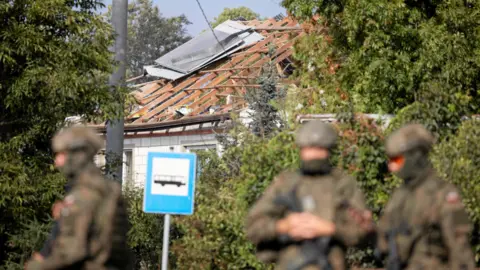
Wednesday morning's incursion of Russian drones into Polish airspace led to jets being scrambled, an emergency government meeting being called - and concerns that Europe and NATO's resolve against Moscow may not be up to the test.
Poland's Prime Minister Donald Tusk said Polish airspace was violated 19 times and at least three drones were shot down by Warsaw's jets, aided by Dutch F-35s and an Italian early warning aircraft.
Russia has pushed back against accusations that the incursion was deliberate – though it also stopped short of denying its drones had trespassed sovereign Polish airspace.
No objects on Polish territory were planned to be targeted, Moscow said.
But European officials have forcefully batted off suggestions the act may have been unintentional.
There is no evidence whatsoever that this amount of drones flew over this route over... Polish territory by accident, Germany's Defence Minister Boris Pistorius said, while his Italian counterpart Guido Crosetto called the overnight events in Poland a deliberate attack with the double aim of provoking and testing.
Although Poland has experienced several violations of its airspace since neighbouring Ukraine was attacked by Russia in February 2022, this latest incursion - sizeable, and deep into Polish territory - sparked real nervousness in Warsaw.
Tusk warned that Poland was at its closest to open conflict since World War Two. He also requested invoking Article 4 of the NATO treaty, which allows member countries to start a discussion with allies about threats to their security.
Some experts and analysts are divided over Russia's motivations.
To some, the drones – some of which flew in the direction of Rzeszow airport, a major logistical hub for defence supplies and humanitarian aid bound for Ukraine – may have had reconnaissance purposes, with poor guidance leading to accidental airspace trespass.
Other analysts have echoed the belief that the high volume of drones entering Polish airspace indicates a deliberate attack.
The incident is seen as a critical test for NATO's unity and response strategy. European leaders are mindful that any perceived weakness in their response could embolden further Russian aggression in the region.
The U.S. response is also under scrutiny, following President Trump's ambiguous comments regarding the incursion, signaling a potential shift in American commitment to NATO's collective security.
As Europe grapples with these tensions, experts warn that any hesitance to act could lead to dangerous consequences, both for Poland and for NATO's overall deterrent posture against Russia.