
In brief
Despite increased diplomatic engagements and talks between Russia and Ukraine, progress towards a peace agreement appears stagnant, with Russia resisting unconditional ceasefire proposals and asserting its claim over occupied territories.
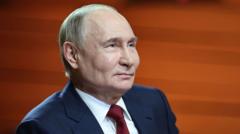
Inside the Kremlin, the atmosphere is charged with uncertainty. Following an event with President Vladimir Putin, a journalist reflects on an intense fortnight of diplomatic endeavors that began with an unexpected late-night statement from Putin and culminated in discussions involving Donald Trump in Turkey. However, despite these high-profile engagements, the situation in Ukraine is far from resolution.Although Putin proposed direct talks aimed at addressing the ongoing conflict, no substantive agreements have emerged. Recent dialogue has failed to bridge the chasm of mistrust, as Russia remains unwilling to fully commit to a comprehensive ceasefire. The Kremlin's refusal to return annexed territories signals its intent to hold onto what it has claimed, deepening the rift in peace negotiations.The past weeks offered insights into Russia's strategic maneuvering as it seeks to buy time against pressures from Europe and the United States. Just before the Istanbul talks, European leaders had issued an ultimatum for a ceasefire; Putin sidestepped this by suggesting negotiations instead. This tactic has been met with skepticism in Ukraine and the broader international community, yet it has succeeded in delaying the imposition of harsher sanctions.Putin's absence from the talks drew criticism, but the Kremlin's portrayal in Russian media highlights a sense of gained confidence in the geopolitical landscape. Articles emphasize that Putin's approach has effectively thwarted European demands while strengthening Russia's overarching narrative of control in the region. As discussions with Trump indicated a potential shift in U.S. policy, many speculate that Moscow views this as a strategic triumph.Despite loud calls for peace from various quarters, further complications arise, especially regarding the legitimacy of Ukraine's leadership. With Putin's administration questioning President Volodymyr Zelensky's authority during wartime, any peace negotiations become increasingly complex. The prospect of fresh elections in Ukraine, hindered by ongoing conflict and constitutional challenges, adds another layer of difficulty.To complicate matters, President Trump’s reluctance to escalate sanctions against Russia reflects a broader agenda of rekindling U.S.-Russia relations, a notion that gives the Kremlin confidence. While Trump has occasionally voiced concern over Russia’s military actions, his administration appears hesitant to take a firmer stance, thereby indicating a preference for dialogue over confrontation.With the U.S. Senate poised to impose further sanctions if Russia does not engage seriously in peace talks, the geopolitical landscape continues to shift. As the fighting in Ukraine persists, the Kremlin maintains its foothold, convinced that it can navigate through mounting international pressure while reinforcing its bargaining position.In the end, despite the whirlwind of diplomatic activity, the pathway to lasting peace in Ukraine remains obscured, much like the winding halls of the Kremlin itself. The international community watches closely, but for now, tangible progress towards a resolution seems painfully distant.



