In brief
A newly released biography chronicles the life of Irawati Karve, who defied societal expectations to become the first female anthropologist in India while challenging the racist ideologies of her time. Her immense courage and empathy not only shaped her field but fostered a legacy that inspires budding anthropologists today.
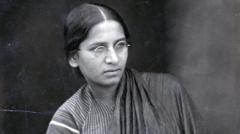
Irawati Karve, an extraordinary figure in the world of anthropology, emerged from British-ruled India at a time when women were largely denied opportunities for higher education and personal freedom. Defying societal norms, Karve became the first female anthropologist in India, making significant contributions to the understanding of Indian culture and civilization. A new book titled *Iru: The Remarkable Life of Irawati Karve*, authored by her granddaughter Urmilla Deshpande alongside academic Thiago Pinto Barbosa, illuminates her remarkable life and the barriers she overcame.Born in Burma (now Myanmar) in 1905 as the only girl among six siblings, Karve was cherished by her family, allowing her a unique opportunity for education during a time when many girls were destined for early marriage. At the age of seven, she was sent to Pune for schooling, where she encountered influential figures, including RP Paranjpye, an educationist who became a paternal figure in her life and inspired her love for critical thinking. Encouraged by Paranjpye and her husband, Dinkar Karve, Irawati pursued her doctorate in anthropology, moving to Berlin in 1927 despite her father's disapproval.In Germany, under the guidance of eugenicist Eugen Fischer, Irawati faced a morally complex environment as she experienced the rising tide of anti-Semitism. After witnessing the brutal murder of a Jewish student, she grappled with the implications of systemic hatred while working on the very thesis that Fischer used to assert racial superiority among Europeans. Despite facing possible repercussions from Fischer, she courageously disproved his hypothesis regarding skull characteristics and racial intelligence, receiving the lowest grade for her efforts.Throughout her life, Karve championed the idea of empathy and understanding, particularly for marginalized groups. She embarked on extensive field studies across rural India, often exploring diverse tribal cultures alongside students and colleagues. In her archaeological pursuits, she became known for her grit, sometimes facing extreme conditions while investigating ancient human remains.Karve's interactions were often marked by deep respect and openness, which highlighted her willingness to confront societal prejudices as she engaged with various communities, including her bold acceptance of tribal customs that challenged her own Brahmin upbringing. Her scholarly work and profound insights into India’s shared humanity led her to stand against religious fundamentalism, promoting the belief that India belongs to all its inhabitants, regardless of creed.Irawati Karve's remarkable journey concluded with her passing in 1970, but her legacy endures as a beacon of inspiration for those who continue to explore the complexities of human societies, proving that profound change can emerge from the courage to defy convention.