In brief
As he reflects on his tenure, critics weigh his significant achievements against perceived shortcomings in judicial assertiveness.
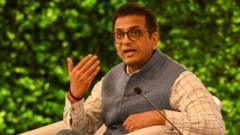
In a recent moment of introspection, Justice Dhananjay Yashwant Chandrachud, who recently retired as India's 50th chief justice, posed a provocative question—to what extent will his tenure be viewed favorably by history? With a deeply analytical mind, he reflected on the concerns that had occupied his thoughts: did he fulfill his goals, and what type of legacy has he carved for future generations of legal professionals? His retirement has triggered a debate across India regarding his accomplishments during over eight years on the Supreme Court, including the last two as its chief.Justice Chandrachud is recognized not only for overseeing one of the most significant supreme judicial systems globally, presiding over the rights of 1.4 billion citizens, but also for being a prominent public figure. Dubbed "India's first celebrity judge," he made headlines for various reasons, including his recent participation in a viral video with Prime Minister Narendra Modi during a Hindu festival. Such visibility, however, has garnered both accolades and criticism.Analysis from legal experts underscores that Justice Chandrachud's prolificacy is unquestionable; he authored 93 judgments—more than the total output of his four predecessors combined—illustrating his commitment to judicial efficiency and legal accessibility through digitization initiatives. Conversely, criticisms have surfaced regarding his perceived lack of decisive action, particularly in politically sensitive cases. Some legal professionals argue that he has not always held the government accountable, resulting in a compromise on judicial independence.Chandrachud's tenure includes landmark rulings on social issues like the decriminalization of homosexuality and the protection of privacy rights, earning him high praise from advocates and progressive circles. His appointment assumed an invaluable context, providing a touch of hope amidst fears of diminishing democratic principles in India, especially with the ruling Bharatiya Janata Party under scrutiny.However, veteran lawyers voiced disappointment at what they characterized as Chandrachud's cautious stances on contentious political matters and his role as the "master of the roster," where his decisions are seen as favoring governmental interests. Critics express concern that while his jurisprudential contributions are commendable, they have fallen short in delivering assertive oversight of executive power.As Justice Chandrachud approaches retirement, debates ignited by his public expressions, including a recent remark on seeking divinity's guidance for judicial deliberations, have sparked contentious dialogues concerning the spiritual in legal contexts. His defense of interaction with the executive indicates his belief in cooperative governance systems, though such assertions do little to quell notions about the integrity of the judiciary.In an eloquent farewell statement, Chandrachud contended that his role as chief justice did not compromise judicial integrity, aiming to leave a "better" system than he found. As India's legal community processes the implications of his complex legacy, it remains clear that Justice Dhananjay Yashwant Chandrachud has stirred a rich and contentious dialogue about the interplay between the judiciary and evolving societal dynamics.