In brief
Nigeria has announced a six-month ban on the export of raw shea nuts commonly used in beauty creams, seeking to transition from being a major exporter of raw materials to a key player in the shea butter market. The country currently produces nearly 40% of the world's shea nuts but captures only 1% of the global $6.5 billion market. The initiative is part of broader efforts to boost local production, create jobs, and empower female farmers involved in the shea industry.
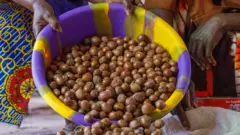
Nigeria has announced a six-month ban on the export of raw shea nuts from which many beauty creams are made. The move is aimed at making the trade more lucrative as Nigeria is losing out by not producing much shea butter locally.The country produces nearly 40% of the world's annual crop, but it only accounts for 1% of the $6.5bn (£4.8bn) global market - a situation Vice-President Kashim Shettima described as 'unacceptable'.Harvested fruit from shea nut trees have to be crushed, roasted, and boiled to extract their oil to produce the shea butter used in cosmetics.The butter is also used in the food industry in the production of some sweets like chocolate and ice creams - and in pharmaceuticals too.Shea trees grow in the wild from West to East Africa - a vast strip known as the 'shea belt'. Small-scale farmers, often women, also plant and harvest them in these areas.Shettima said the temporary ban would enable Nigeria to move from being an exporter of the raw nuts to a global supplier of refined shea products. 'It is about industrialisation, rural transformation, gender empowerment and expanding Nigeria's global trade footprint,' the vice-president said during the announcement at State House in Abuja.The short-term aim, he said, was to see Nigeria's earnings from the fruit of the shea nut trees grow from $65m to $300m annually.Nigeria Agriculture Minister Abubakar Kyari has said the West African nation produces a crop of 350,000 tonnes a year - with nearly 25% of that disappearing over the borders in unregulated informal trade.Dr. Ahmed Ismail, an agriculture expert, noted that much of the harvest comes from villages in central Nigeria and emphasized that this is a necessary step that should have been taken long ago to regulate the market and ensure farmers receive a fair price.