In brief
Amidst the picturesque backdrop of Davos, President Trump projected a bold vision for the U.S. economy, simultaneously issuing stern warnings regarding trade policies to a gathering of world leaders and business magnates.
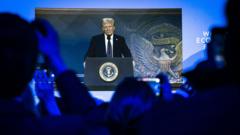
This week, the alpine town of Davos became the stage for a fascinating clash of ideologies, as President Donald Trump addressed the elite at the World Economic Forum. Beamed in directly from the White House, Trump presented an image of a resurgent America, promising to "end America's decline" while suggesting drastic measures for foreign economies to comply with his nationalistic agenda. He implied that Canada could potentially become a U.S. state to avoid the heavy tariffs he threatened to levy on businesses exporting to the U.S. from overseas.Trump captivated the Davos audience with a dual message of economic opportunity and intimidation, leaving delegates pondering how much he would challenge the rules-based international order. His presence was a stark reminder of the conflicts inherent in a traditional forum for international cooperation. While U.S. tech innovation was heralded with pride, concerns persisted around the implications of Trump's "America First" policy on global trade.As delegates digested his mixed messages—words of praise interspersed with threats—some attendees quietly braced for possible retaliatory measures, including tariffs on their exports. Industry leaders acknowledged the volatility of Trump’s presidency, with uncertainty looming over how his administration would navigate international trade agreements moving forward.U.S. CEOs expressed hopes that rising stock market interests might temper Trump’s inclination to impose tariffs. Meanwhile, allies in Canada, the UK, and the EU are eager for calm dialogue, advocating for a unified approach against potential retaliatory tariffs. Industry leaders in Europe view Trump's rhetoric with caution and see opportunities in attracting researchers disillusioned by U.S. political shifts.As the world observes, Trump’s administration is poised to enforce significant changes to global trade frameworks, with ongoing assessments of international cooperation being critical in the wake of his provocative stance. The impact of this economic ultimatum on alliances and trade relations will manifest over the coming years, shaping the global marketplace and geopolitical landscape.