In brief
The Consumer Financial Protection Bureau (CFPB), established post-financial crisis, is facing potential shutdown by Elon Musk's Department of Government Efficiency (Doge), causing public unrest and fears about consumer data security.
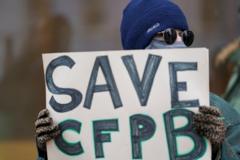
Elon Musk's Department of Government Efficiency, known informally as Doge, is making waves by asserting control over the Consumer Financial Protection Bureau (CFPB), a government agency designed to shield consumers from financial malpractices. In a move reflective of the Trump administration's cost-cutting priorities, Doge now has "read-only" access to the CFPB's sensitive internal systems, including comprehensive consumer data. The CFPB, which employs around 1,750 staff members and operates on a $758 million budget, has faced persistent scrutiny from Republican factions, who accuse it of overreach.This takeover has sparked demonstrations, with approximately 100 workers protesting outside the CFPB's headquarters, voicing alarm over the potential endangerment of the personal information of American consumers. The CFPB, established in 2011 in response to the 2007-2008 financial crisis, oversees a myriad of banking regulations and consumer protection laws, aiming to prevent exploitation of vulnerable financial clients.Maxine Waters, the top Democrat on the House Financial Services Committee, condemns Musk's influence as an infringement on consumer privacy, warning that the agency's data could expose sensitive information like bank statements and Social Security numbers. Meanwhile, the National Treasury Employees Union categorizes Doge’s involvement as a “potentially dangerous incursion,” promising to safeguard the privacy of consumers and financial institution data.Following the ousting of CFPB director Rohit Chopra and the appointment of Russell Vought, who stands with the intention of abolishing the agency, Musk is accused of pushing a radical agenda through Doge to diminish the regulations and privacy protections originally designed to protect American consumers. As tensions escalate, the future of the CFPB, and by extension, the privacy of millions of Americans, hangs in a precarious balance.