
In brief
This year marks two years since the devastating fire at the Usindiso building in Johannesburg, South Africa, which resulted in the tragic loss of 76 lives. Survivors like Vusi Tshabalala continue to live in fear, now not only from the memories of the blaze but from the ongoing violence and insecurity in makeshift accommodations. As they navigate inadequate housing conditions and struggles to find employment, the promises made by authorities for better housing remain unfulfilled, trapping many in a cycle of despair. Activists highlight a lack of commitment from local government to provide safety and long-term solutions for displaced residents.
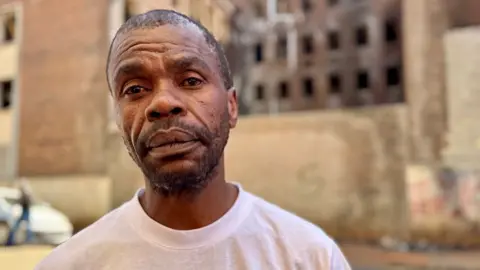
Blackened by soot, the gutted and derelict remains of South Africa's infamous Usindiso building in central Johannesburg are an unintentional memorial to the 76 people who died here in a devastating fire two years ago. At one time an office block, the 1950s building in the Marshalltown area was abandoned and then taken over by several hundred people desperately needing a home. One of those was Vusi Tshabalala, who shakes his head in disbelief as he recalls how he survived the blaze on that late August night.The fire seemed to come out of nowhere, the 45-year-old tells the BBC in a melancholic voice, raspy from years of smoking cigarettes. Mr. Tshabalala was asleep on the third floor of the five-storey building, where he was sharing a place with his then-girlfriend and brother. Awoken by the flames, they managed to escape by covering themselves in wet blankets and running in the dark towards an exit at the rear. As we were running others got injured, because when they fell down, they couldn't get back up. People were running over them. I thank God that we came out without any injuries. The tragedy shocked the nation and highlighted the deep housing inequalities in Africa's wealthiest city - inequalities the authorities promised to address.Visiting just hours after the blaze, President Cyril Ramaphosa called it a wake-up call to begin to address the situation of housing in the inner city. But two years on, Mr. Tshabalala and many others have still not found a permanent home.Initially, he was relocated to Rosettenville, 5 km (three miles) south of Marshalltown, but he says he left because he could not find work around there. Next, he tried the industrial neighbourhood of Denver, 6 km east of the Usindiso building, where other survivors have been placed - but he says the frequent shootings forced him to leave. At the moment he lives in the shadow of his former home, where other former Usindiso building residents have put up shacks in an informal settlement known as Emaxhoseni, made of corrugated iron and wood. I came back because at least here we get jobs. The other places we were taken to, we can't find work. He blames the authorities for not doing enough to support the survivors of the fire: No one wants to know where the people from this tragedy are living.Meanwhile, many of the former Usindiso building residents remain in limbo, with uncertainties about their future while grappling with safety fears in the informal settlements. Survivors describe living in dire conditions, with limited access to basic services, while activists criticize the government's failure to provide timely long-term housing solutions. As the G20 summit approaches, the hope for revitalization and safety in Johannesburg's inner city remains uncertain.

