In brief
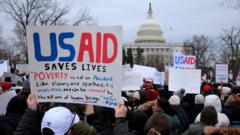
Reports indicate that the U.S. Agency for International Development may limit its workforce from approximately 10,000 to fewer than 300, prompting protests and legal challenges from employee unions.
The Trump administration's proposed budget cuts could lead to a dramatic reduction in USAID's workforce, slashing it from an estimated 10,000 employees to an alarming figure of less than 300 worldwide. As part of this initiative, effective at midnight on Friday, most agency staff—including thousands working overseas—are set to be placed on administrative leave.A notice available online indicated that preparations for return travel and the cessation of non-essential contractor roles are underway, further jeopardizing the agency's ability to operate effectively. Presently, only 294 individuals have been classified as essential staff according to the American Foreign Service Association (AFSA), one of the unions opposing the administration's drastic cutbacks.These measures, advocated by cost-saving advisor Elon Musk, are characterized by the administration as necessary for achieving "America First" policy goals and addressing what they view as USAID's inefficient expenditure of taxpayer resources. Public sentiment reflects a degree of skepticism regarding foreign aid, with recent polling revealing that up to 90% of Republicans perceive overspending in this area.Critics assert that such radical cuts threaten the integrity of global aid networks, with the former chief of USAID, Brian Atwood, labeling the plan as "outrageous." He warns that the diminished staffing could effectively dismantle an agency instrumental in saving millions of lives.The AFSA, in cooperation with the American Federation of Government Employees (AFGE), has initiated legal action against the administration in an effort to halt the proposed layoffs. The lawsuit critiques the administration's plans as unconstitutional, asserting that dismantling a federal agency requires congressional consent. It demands the appointment of an independent acting director for USAID, reopening of the agency's facilities, restoration of its website and funding mechanisms, and cessation of mandatory evacuation notices for staff.As thousands of USAID employees brace for administrative leave, the agency's website emphasizes that all direct hire personnel will be affected by this decree. In a show of support for the cuts, Senator Marco Rubio reassured agency workers in Guatemala that the U.S. remains committed to foreign aid but insisted that future programs must align closely with national priorities, requiring justification and clarity.While officials express a desire to reframe foreign aid initiatives, the looming reduction in USAID's capacity raises serious questions about the United States' ability to engage in timely humanitarian assistance. Critics highlight the potential risks to both global stability and U.S. national security interests that could arise if USAID's critical operations are significantly curtailed.