In brief
In a significant political development, Germany's conservative leader, Friedrich Merz, declared the formation of a coalition with the Social Democrats, positioning the government to tackle pressing economic issues and regain confidence in the nation's political landscape.
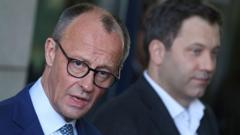
Germany's political arena is witnessing a pivotal shift as Conservative leader Friedrich Merz announced a coalition agreement with the Social Democrats, five months post the collapse of the previous government. At 69 years old, Merz stated the draft deal serves as a "strong and clear signal" to Germans and the European Union, emphasizing the establishment of a robust and action-oriented government.Even prior to political upheaval, Germany's economy was grappling with recession, exacerbated by economic disruptions stemming from US trade policies. Merz articulated a key message to the international community, stating, "Germany is back on track," and underscored commitments to fulfill defense obligations while enhancing economic performance.Under increasing pressure from his Christian Democrats' initial electoral success, Merz has attempted to navigate through political uncertainty, especially as his party struggles against the rising influence of the far-right Alternative for Germany (AfD). While announcing the coalition deal, he outlined reform priorities focused on migration policy, economic renewal, and defense."Our allies in Europe can rely on Germany," Merz asserted, pledging a comprehensive plan to restore the country's prominent position on the global stage. Although he awaits parliamentary approval of his chancellorship during the week of May 5, Merz boasts a commanding majority of 13 seats.Recent legislative efforts already reflected the urgency of the coalition; by revising strict debt regulations, the government aims to invest profoundly in both military enhancement and infrastructural rejuvenation. This pact encompasses measures to curb irregular migration and bolster border security—issues that resonated strongly with voters in the previous year’s election cycle. In reaction to the coalition's strategies, AfD leaders criticized the plans as insufficient, accusing Merz of yielding to the Social Democrats' stance. A parliamentary report has highlighted critical shortages across Germany's military apparatus, making military reform a top priority. Merz proposed increasing defense spending without reinstating conscription, instead favoring a voluntary service model similar to Sweden's.A commitment to support Ukraine will also be part of Merz's agenda as Germany stands firm against external pressures, notably US tariff approaches. Although this coalition marks the fifth grand coalition of its kind since World War II, the involved parties insist this government will differ from predecessors, with Merz taking the helm alongside primarily new cabinet faces, albeit with continuity in defense ministry leadership under outgoing Social Democrat minister Boris Pistorius.However, criticisms persist, notably from populist left leaders like Sahra Wagenknecht, who argue the coalition does not adequately address Germany's enduring economic struggles. Diagnosing the nation’s plight, she warned of further recession cycles, branding the situation under Merz as "Merzession." As support shifts in public opinion, recent Ipsos data indicates that Merz's conservatives are now second to the AfD, who are capitalizing on rising discontent. The political landscape remains dynamic with potential for substantial changes ahead.