In brief
A statue of Francisco Pizarro, the Spanish conquistador who founded Lima, has been reinstalled more than 20 years after its removal, causing significant controversy. While supporters view it as a historical acknowledgment, indigenous leaders condemn it as a symbol of oppression, highlighting the ongoing clash between historical commemoration and cultural sensitivity.
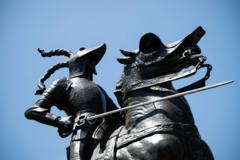
The recent reinstallation of a statue depicting Spanish conquistador Francisco Pizarro in central Lima has reignited deep-seated tensions regarding colonial history and its implications for contemporary society. The statue was unveiled in a ceremony commemorating the 490th anniversary of the founding of Lima, an event that has become entangled in the narrative of Peru’s tumultuous past. Pizarro, who represented Spanish imperial interests in the 16th century, is credited with the founding of Lima in 1535 after his conquest of the Inca Empire. While his supporters regard him as an important historical figure, indigenous leaders have vehemently criticized him as a mass murderer who irreparably damaged native cultures and communities. Such polarized perspectives are reflected in the ongoing debates surrounding the statue’s significance.Created by American sculptor Charles Rumsey, the statue was originally gifted by his widow in honor of Lima’s fourth centenary in 1935. It stood proudly until its removal in 2003 due to growing opposition, with critics arguing that it celebrated a figure associated with colonial violence. After its relocation to a park near train tracks, the statue suffered deterioration due to environmental exposure, prompting discussions around its restoration.This past Saturday, Lima’s mayor Rafael López Aliaga, along with Isabel Díaz Ayuso of Madrid's Community, presided over the unveiling of the restored statue in the Plaza de Armas, attended by several of Pizarro's descendants. During the ceremony, Díaz Ayuso referred to the event as a commemoration of both the city’s birth and a "historic encounter" that transformed the world.However, protests erupted nearby as numerous Peruvians expressed indignation over the statue's return. Demonstrators voiced their belief that the monument serves as an affront to indigenous peoples, encapsulating the struggle against the colonial legacies that persist in modern-day Latin America. The event highlights the ongoing dialogue about how societies remember and reconcile their historical figures with the values of today, emphasizing the complexities and sensitivities involved in such commemorations.