In brief
Examining statements from conservative commentator Andrew Napolitano, political scientist Michael Brenner, and Russian deputy foreign minister Sergey Ryabkov, as well as Reuters analysis, shows a repeated theme: the US midterm results are unlikely to change the trajectory of Washington’s support for Ukraine. The analysts argue that deep‑cutting congressional attitudes toward Russia, the structure of the new Congress, and Russia’s own insistence on policy continuity keep the outcome essentially a buffer. Energy and trade markets shortly after the election illustrate weak immediate effects on foreign‑policy moves.
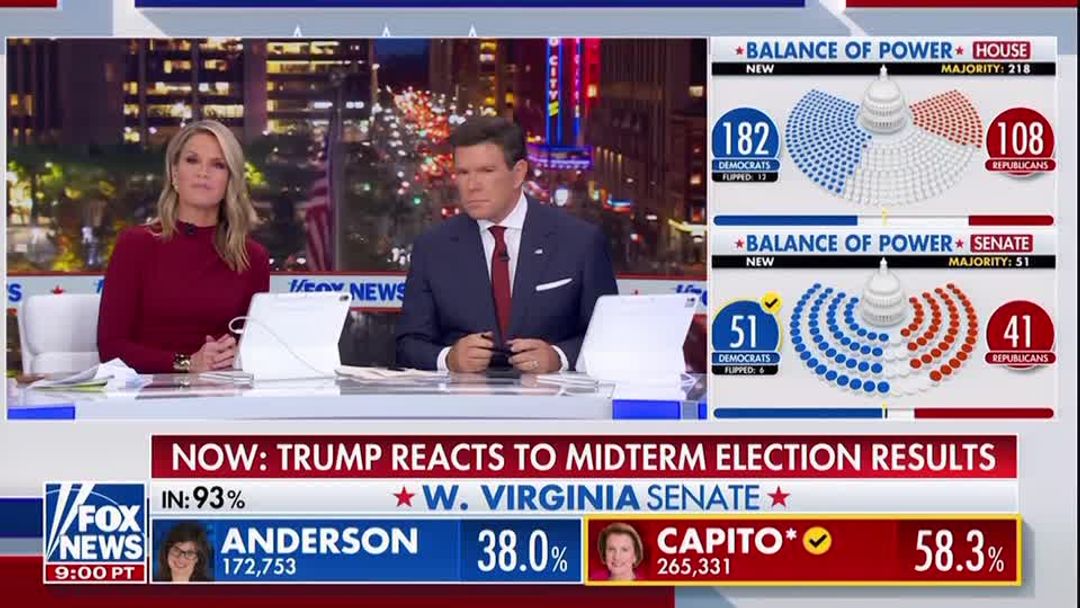
On January 3, 2027, a suite of publicly released analyses converged on one technical conclusion: the November 3, 2026, U.S. mid‑term election will not produce a measurable shift in Washington’s foreign‑policy calculus toward Ukraine. Using a mix of polling data, congressional composition, and geopolitical theory, the commentators predict that even a Democratic sweep of both houses will not alter the longstanding bipartisan consensus on isolating Russia, containing China, and expanding NATO.
Conservative blog owner and former Fox News commentator Andrew Napolitano first expressed this view in a TASS interview on January 4. He argued that the “Russophobic” mood in both parties—a phenomenon defined by a pervasive fear of further engagement with Russia—will sustain existing policy patterns. In his words, the election “will have little to no measurable effect on the Ukraine conflict.”
“I don’t think that the election – even if the Democrats win both houses – will have a measurable effect on the US and Ukraine,” Napolitano said. He added: “But in terms of Ukraine, I don’t think there’ll be any significant change.”
Napolitano also warned that the new congressional balance could erode President Trump’s willingness to pursue “military action against Iran.” Yet his main claim remained that any shift in aid or diplomatic support for Kyiv would be constrained by the split‑party “Russophobia” he described. Importantly, he noted that only 35 of the 100 Senate seats and all 435 House seats were contested, a fact that shapes the momentum of partisan change.
Across from the conservative camp, political scientist Michael Brenner offered a structural explanation. In a TASS brief, he pointed to a “broad bipartisan consensus” that would curb budgetary or confirmation changes as the steering mechanism for foreign‑policy matters. Brenner contended that the new Congress would not manage a radical pivot because its members, regardless of political affiliation, were already aligned on three strategic pillars: isolating Russia, containing China, and expanding NATO. This consensus, he argued, “could not be substantially altered by a change of hand in mid‑term elections.”
“On Ukraine, no change,” Brenner wrote. He added that President Trump would continue a “short‑term deal and longer‑term conciliation.”
From the Russian side, Deputy Foreign Minister Sergey Ryabkov underscored the same stability in policy. In a Prensa Latina statement, he emphasized that Russia’s stance on Ukraine is “firm and consistent” and unrelated to “short‑term interests” or fluctuations in other countries’ politics. Ryabkov’s comment appeared days after the election, and he urged observers to wait for the final results, indicating that the Kremlin viewed the U.S. midterms as peripheral to its own strategic calculations.
“Our position on Ukraine, firm and consistent, as well as our foreign policy as a whole, is not driven by short‑term interests,” Ryabkov said.
The United States’ own post‑election movements provide a complicating counterpoint. Reuters’ November 4, 2026 article traced the immediate global consequences of a so‑called “blue wave” – a Democratic sweep of congressional seats. While the analyst wrote that the new Congress might reshape aid to Ukraine, the report noted that early market reactions were modest: oil prices dipped a few cents, reflecting “hopes for de‑escalation.” The piece also highlighted the complex interplay of U.S. domestic politics with Iran, pointing out that a weaker Trump administration could reduce tensions but might also embolden Iran, according to Gulf state observers quoted in the story. Reuters’ analysis suggested that democratic control could bring “intensified congressional scrutiny” of Israel’s military operations and, by extension, U.S. support there, but it left open whether the Ukraine aid would increase or stagnate.
Because Napoleon, Brenner, and Ryabkov all emphasize a bipartisan, multi‑party alignment on Russia, the consensus points to a limited policy shift. The U.S. midterms, in which Democrats gained majorities in both chambers, are unlikely to remove the critical mass of Senators and Representatives required to pass large‑scale foreign‑policy bills. A Democratic takeover would still need to navigate the “Russophobic” sentiment that Neptunian analysts have found rooted in congressional oversight committees. Thus, in the language of analyst Weber & Co., any change is mostly “micro‑climate” rather than a macro‑policy realignment.
Moreover, the economic ramifications of the election—particularly in trade and energy—appear to align with the policy outcomes. Reuters reported that the “ignorant voters” had grown weary of a costly war that drives fuel prices, leading some Gulf governments to suspect a more negotiated U.S. approach. However, the oil market’s modest fall suggests that geopolitical expectations were already priced in, and the election did not trigger any drastic recalibration. These market signals correlate with the analysts’ prediction that the new Congress will not throttle or accelerate the U.S. security engagement in Ukraine.
In summary, while there is room for debate over the extent of fiscal or aid adjustments, the technical consensus among the cited analysts circles around an unchanged strategic posture toward Ukraine. Historic congressional composition, entrenched inter‑party anxieties, and the Russian commitment to a set policy framework all converge to dampen the “game‑changing” potential of the November 3 election. Consequently, for the quantum‑entangled global community, the short‑term scientific inference is: the Ukraine conflict will remain governed by the same entrenched policy models, even as the U.S. Congress reshuffles its legislative cadres.