
In brief
The recent expansion of Brics, with the inclusion of Egypt, Ethiopia, Iran, and the UAE, highlights India's strategic positioning within the group. While Brics aims to serve as a counterbalance to Western dominance, India leverages its partnerships to bolster its own foreign policy goals, including multilateralism and engagement with the Global South. Despite concerns of an anti-Western tilt, the group is unlikely to pose a significant threat to Western interests, aligning more with India's own diplomatic ambitions.
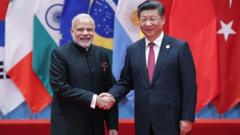
The Brics alliance, once marginalized by Western critics, has recently gained momentum, celebrating its expansion at a summit in Russia that included representatives from 36 nations and the UN Secretary General. Notably, four new members—Egypt, Ethiopia, Iran, and the UAE—joined the group, signaling a departure from its historically slow growth since South Africa was added in 2010. This newfound visibility reflects a growing global dissatisfaction with traditional Western power structures, and India stands to benefit significantly from this shift.India’s longstanding relationships with the new members of Brics enhance its position within the group. Egypt is deepening trade and security ties with India, while the UAE is one of India’s crucial partners in the Middle East. Moreover, India has nurtured one of its longest partnerships in Africa with Ethiopia. This dynamic makes India's presence in Brics not just advantageous but essential for its broader geopolitical strategy.Historically, India has maintained a Western orientation, yet its involvement in Brics allows it to maintain ties with Russia amidst efforts to isolate it and to work cautiously with China. Prime Minister Modi's recent diplomatic engagements with Xi Jinping at the summit came following an agreement on border patrolling, reflecting a desire to ease tensions particularly given the backdrop of Brics’ expanding influence.The alliance helps India pursue its core principle of strategic autonomy, enabling it to balance relations with a diverse array of geopolitical players without forming overt alliances. This balancing act is crucial as India continues to foster relationships with Western allies while engaging in multilateral initiatives within Brics.The joint statement from the Brics summit emphasized principles echoing India’s own priorities: bolstering engagement with the Global South, promoting multipolarity, advocating for reform in international institutions, and opposing Western sanctions that impact trade and infrastructure ventures for India.However, the rise of Brics also presents challenges. While some view the group as a potential instigator against the West, many of its new members, such as the UAE and Egypt, maintain significant connections with Western nations, complicating any perception of a unified anti-Western stance. Furthermore, member states have historical tensions with one another, as seen in disputes involving Iran, Egypt, and the UAE.Despite these concerns, the fears of an antagonistic Brics are largely overblown. Even if the group were to include additional anti-Western members, the collective capacity to enact substantial initiatives against Western interests remains uncertain, particularly given internal disagreements and the relative economic dependence many members have on the US dollar.India's relationship with China, despite temporary easing, remains strained. Ongoing border disputes and competition in strategic regions indicate that a stable or cooperative environment is far from assured—a reality that India must navigate cautiously through its role in Brics.Ultimately, Brics provides India with an advantageous platform to work alongside like-minded states committed to shared diplomatic goals while addressing its need for balance in an increasingly complex global landscape. The potential for meaningful collaboration on non-contentious issues such as climate change, education, and public health can foster cooperation without antagonizing Western nations. Thus, India stands to gain a multifaceted advantage from its strategic involvement in Brics, cloaked in partnerships that resonate with its foreign policy ethos.