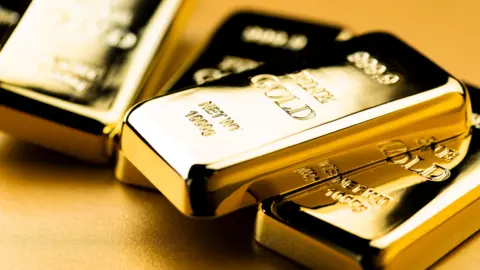
Recent global tensions and instability have resulted in soaring gold prices, reaching record levels amidst fears of potential challenges in the international economy. As of January 29, 2026, gold briefly surpassed the $5,500 mark, although it has receded slightly in the following days. Concurrently, silver has also exhibited notable growth in value, trading around $98 per ounce, a marked increase from $35 a year prior.
Governments worldwide, notably influenced by the ongoing trade policies of the US administration under President Donald Trump, are increasingly allocating resources to gold as a safe investment. Trump's aggressive trade tariffs and political decisions have unsettled many investors, who are now turning to gold as a more stable asset. Strategic insights from analysts like Emma Wall underscore that geopolitical uncertainties heightened by events in Ukraine and the Middle East feed into gold's appeal as a hedged investment.
While central banks around the globe have ramped up gold purchases, signifying a critical shift toward securing reserves against possible economic fallout, recent selling pressures have also emerged. Reports suggest a decrease in overall demand for gold despite continued central bank acquisitions, particularly noting the dynamic role nations perceive gold to play amid fluctuating US fiscal policies.
Despite the recent dips influenced by signs of political stabilisation in the US, gold remains significantly more valuable than this time last year, an indication of its enduring stature in times of crisis. However, volatility underlines the risks involved with commodities trading, as demonstrated by how swiftly its market value can shift, underscoring both the allure and dangers inherent in gold market investments.
Governments worldwide, notably influenced by the ongoing trade policies of the US administration under President Donald Trump, are increasingly allocating resources to gold as a safe investment. Trump's aggressive trade tariffs and political decisions have unsettled many investors, who are now turning to gold as a more stable asset. Strategic insights from analysts like Emma Wall underscore that geopolitical uncertainties heightened by events in Ukraine and the Middle East feed into gold's appeal as a hedged investment.
While central banks around the globe have ramped up gold purchases, signifying a critical shift toward securing reserves against possible economic fallout, recent selling pressures have also emerged. Reports suggest a decrease in overall demand for gold despite continued central bank acquisitions, particularly noting the dynamic role nations perceive gold to play amid fluctuating US fiscal policies.
Despite the recent dips influenced by signs of political stabilisation in the US, gold remains significantly more valuable than this time last year, an indication of its enduring stature in times of crisis. However, volatility underlines the risks involved with commodities trading, as demonstrated by how swiftly its market value can shift, underscoring both the allure and dangers inherent in gold market investments.