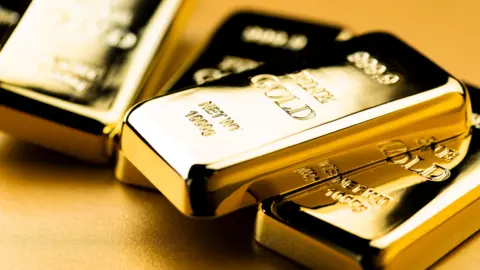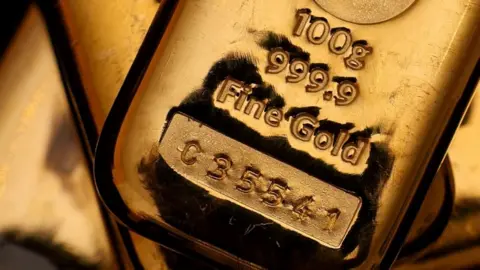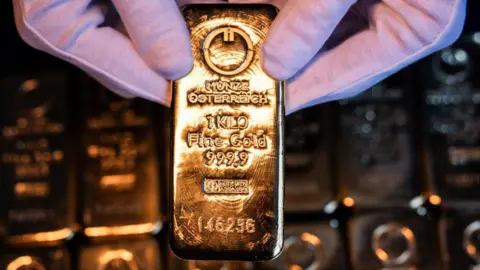
The gold price has hit another record high, trading above $4,400 (£3,275) an ounce for the first time. The price of the precious metal has risen on expectations that the US central bank will cut interest rates further next year, analysts said. Gold started the year valued at $2,600 an ounce, but geopolitical tensions, various trade tariffs, and the anticipation of rate cuts have fueled demand for safe-haven assets like gold.
The spot price of gold hit a high of $4,420 before experiencing a slight pullback. This year, gold prices have surged more than 68%, marking the highest increase since 1979, according to Adrian Ash, director of research at BullionVault. Slow-burning trends around interest rates, conflict, and trade tensions have impacted gold prices significantly.
Experts point out that the trade war and geopolitical tensions have played a considerable role in the massive fluctuations seen in the precious metals market, citing former President Trump’s policies as a catalyst. The expectation that the US will lower interest rates twice in 2026 has led investors to gravitate towards commodities like gold and silver for better returns and to diversify portfolios.
Additionally, central banks worldwide are increasing their gold reserves to mitigate economic instability and reduce dependency on the US dollar. Analysts indicate that this pattern is likely to persist into 2026.
Gold’s steady price increase highlights its role as a hedge against inflation and economic instability, especially when confidence in financial markets begins to waver. A weaker US dollar has also contributed to higher gold prices, making the metal more affordable for international buyers. Furthermore, silver and platinum have also experienced record highs this year, and they are increasingly in demand due to their industrial applications.
In related news, oil prices have also risen recently, but both Brent crude and US oil are expected to end 2025 at lower prices than at the beginning of the year.
The spot price of gold hit a high of $4,420 before experiencing a slight pullback. This year, gold prices have surged more than 68%, marking the highest increase since 1979, according to Adrian Ash, director of research at BullionVault. Slow-burning trends around interest rates, conflict, and trade tensions have impacted gold prices significantly.
Experts point out that the trade war and geopolitical tensions have played a considerable role in the massive fluctuations seen in the precious metals market, citing former President Trump’s policies as a catalyst. The expectation that the US will lower interest rates twice in 2026 has led investors to gravitate towards commodities like gold and silver for better returns and to diversify portfolios.
Additionally, central banks worldwide are increasing their gold reserves to mitigate economic instability and reduce dependency on the US dollar. Analysts indicate that this pattern is likely to persist into 2026.
Gold’s steady price increase highlights its role as a hedge against inflation and economic instability, especially when confidence in financial markets begins to waver. A weaker US dollar has also contributed to higher gold prices, making the metal more affordable for international buyers. Furthermore, silver and platinum have also experienced record highs this year, and they are increasingly in demand due to their industrial applications.
In related news, oil prices have also risen recently, but both Brent crude and US oil are expected to end 2025 at lower prices than at the beginning of the year.