In brief
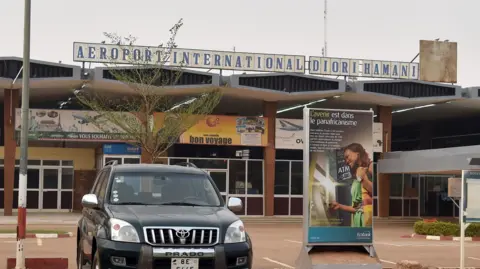
A BBC report details gunfire and explosions at Diori Hamani International Airport in Niamey early on Thursday, with residents hearing the sounds from the mosque area around 06:00 local time. The attack follows a similar January assault on the same airport, part of Niger’s ongoing Islamist insurgency. Soldiers reportedly repelled the attackers, who abandoned their weapons, while the government has extended fences and installed over 350 surveillance cameras. The incident occurs amid accusations from Niger’s junta leader that external governments may have supported the attackers.
At the Diori Hamani International Airport in Niamey, gunshots and explosions were heard on Thursday morning, with residents reporting the sounds emanating from the approach at around 06:00 local time (05:00 GMT). The incident marks a repeat assault on the same airport that took place in January, when a suspected jihadist group launched a similar attack.
Witnesses told the BBC that the gunfire lasted roughly two hours and that the assailants had abandoned their weapons as army forces drove them back. The attack was apparently repelled by the Nigerien military, and the fleeing attackers are believed to have dispersed.
The Nigerien defence ministry noted in January that four soldiers were injured and twenty attackers were killed during the earlier raid. Responding to the unrest, the government has demolished neighbourhoods near the airport, expanded the perimeter fence, and installed more than 350 surveillance cameras to boost security.
The nation’s military junta leader, Abdourahamane Tiani, has cited Russia for help in stopping January’s assault and accused French, Beninese, and Ivorian presidents of supporting the attackers—an accusation that has yet to be corroborated. No Islamist group has claimed responsibility for Thursday’s attack, though an affiliate of the Islamic State announced it carried out the January strike.
For a broader understanding of the region’s instability, BBC Africa offers in-depth coverage of how insurgent groups evolve and the geopolitical tensions surrounding Niger’s strategic resources.