In brief
In a decision issued hours before U.S. midterm polls opened, the Supreme Court declined to issue a temporary stop to California’s mail‑in ballot count. The Department of Justice had argued that more than 20,000 ballots could have been cast by non‑citizens, but the court found the evidence insufficient. The ruling underscored the judiciary’s role in protecting the electoral process amid a contested election environment.
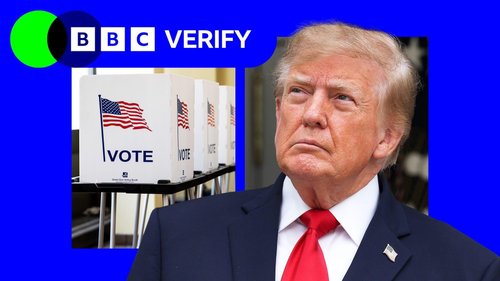
The U.S. Supreme Court denied, on Monday, an emergency petition filed by the Trump administration demanding that California halt the counting of more than 20,000 mail‑in ballots it claimed were cast by non‑citizens. The court’s order, issued just a few hours before voters were to enter polling places, emphasized that the administration’s data set lacked the transparency and verification needed to justify such a pause.
In the legal filing, the Department of Justice (DOJ) asserted that a list of registered voters in California contained a substantial number of individuals who were not U.S. citizens, and it requested that election officials withhold those ballots until their citizenship status could be confirmed. The DOJ had filed its complaint on October 15, citing the alleged potential for non‑citizen influence on the outcome of a high‑stakes midterm election that could reshape congressional control.
California election officials responded by arguing that the DOJ did not provide a clear methodology for verifying the citizenship claims. According to the Los Angeles Times, the documentation supplied by the DOJ did not contain a reproducible verification protocol, making it impossible to remove ballots based solely on unverified records. The state's Governor Gavin Newsom warned that a federal push for search warrants to retrieve ballots and related materials could further disrupt the vote‑counting and certification process.
Trump, on his Truth Social platform, shared a letter from acting U.S. Deputy Attorney General Trent McCotter stating that "knowingly facilitating" non‑citizen voting in federal elections is unlawful. The letter also threatened that California election officials could face severe penalties if they complied with the DOJ’s demand. The reaction highlighted the administration’s broader strategy of challenging ballots in key battleground states.
Legal Context and Timing
The emergency petition was filed a day after a federal judge had already denied a similar request to the DOJ, ruling the action unconstitutional. The Supreme Court’s rejection was swiftly delivered, underscoring the court’s perceived responsibility to prevent disruptions to the electoral counting process. With the midterm election scheduled to open on Thursday, the decision came at a critical moment for both parties, as the outcomes in several Republican‑leaning states—including Texas, Iowa, and Kansas—could determine congressional control.
Reuters reported that the race for Senate seats in states such as North Carolina, Michigan, and Maine had become especially complicated due to ranked‑choice voting systems and candidate endorsements. While those dynamics play out in the electoral arena, the Supreme Court’s ruling ensures that California’s mail‑in ballots will be counted in a timely manner, allowing the state’s results to be reported without legal interference.
Implications for the Voting Process
The decision preserves the integrity of California’s electoral machinery, reinforcing the principle that courts should not grant temporary, broad‑scope restrictions on ballot counting without robust evidence. By requiring a verifiable method for citizenship verification, the court reinforced a standard that protects both voter rights and election security. The ruling also highlights the importance of data transparency, a key concern for emerging technologies that analyze voting patterns. In a climate of rapid information sharing and data-driven insights, the Supreme Court’s emphasis on verifiable data sets a precedent for how future challenges to the validity of ballots may be assessed.
As the nation heads into its midterm elections, the Supreme Court’s decision to keep California’s mail‑in ballots on track will likely influence how other states handle similar disputes. By upholding a data‑driven standard, the court has set a benchmark that may guide both legal strategies and the scientific examination of electoral data in subsequent elections.