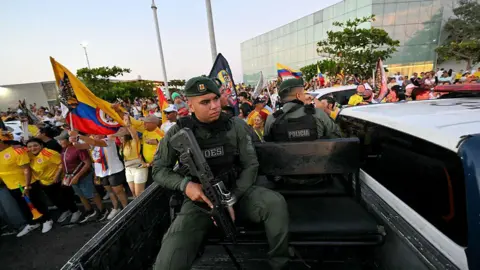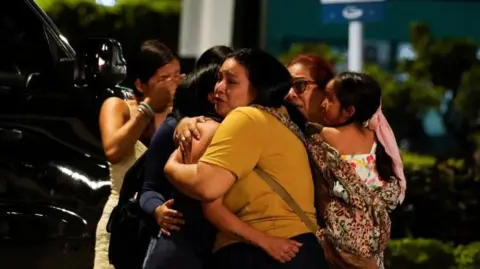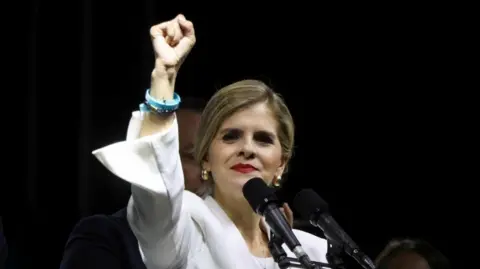
Laura Fernández, the candidate from the conservative Sovereign People's Party, has emerged victorious in the recent presidential election in Costa Rica.
With more than 88% of the votes counted, Fernández garnered over 48%, decisively defeating her centrist opponent Álvaro Ramos, who has since conceded.
Her campaign focused on strengthening the tough-on-crime approaches championed by outgoing President Rodrigo Chaves, who has endorsed her as his successor. Voter concerns over escalating drug-related violence significantly influenced election sentiments.
Fernández's substantial first-round win means that a run-off is not required, a notable achievement given the necessary threshold was 40%.
Scheduled to be inaugurated on May 8, Fernández has declared her commitment to advancing policies established under Chaves, from whose administration she drew considerable experience as chief of staff.
Under Costa Rican law, presidents are prohibited from serving consecutive terms, which prevented Chaves from seeking re-election. In her victory address, Fernández hinted that Chaves might be appointed to a role in her cabinet.
Recent years have seen Costa Rica, known as one of Central America's safest nations, grapple with rising criminal activities linked to transnational gangs. During her campaign, Fernández indicated plans to adapt strategies from El Salvador's President Nayib Bukele, who boasts high approval ratings due to his stringent actions against crime.
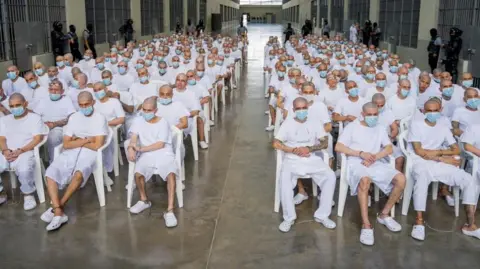
Fernández expressed intentions to institute states of emergency in areas affected by gang violence and has committed to finishing the construction of high-security facilities similar to El Salvador's Cecot prison.
Moreover, she reassured voters that her governance would uphold respect for legal rights, despite criticisms that stringent policies could jeopardize civil liberties.
In a combative tone, she also condemned opposition efforts to obstruct her predecessor’s initiatives, highlighting a more favorable parliamentary situation for her party, which won 30 out of 57 seats, providing her with greater legislative support.
Before her presidency, the 39-year-old served as planning minister and held various governmental roles, aligning closely with Chaves’s governance style. Her administration is expected to maintain strong ties with the United States, continuing established agreements that involve the management of migrants and addressing the U.S. government's categorization of Costa Rica as a key transit point for cocaine.
As Costa Rica faces challenges posed by organized crime, Fernández’s election marks a pivotal moment in the nation's political landscape, as she aims to tackle pressing security issues head-on while fostering a broader dialogue about governance.