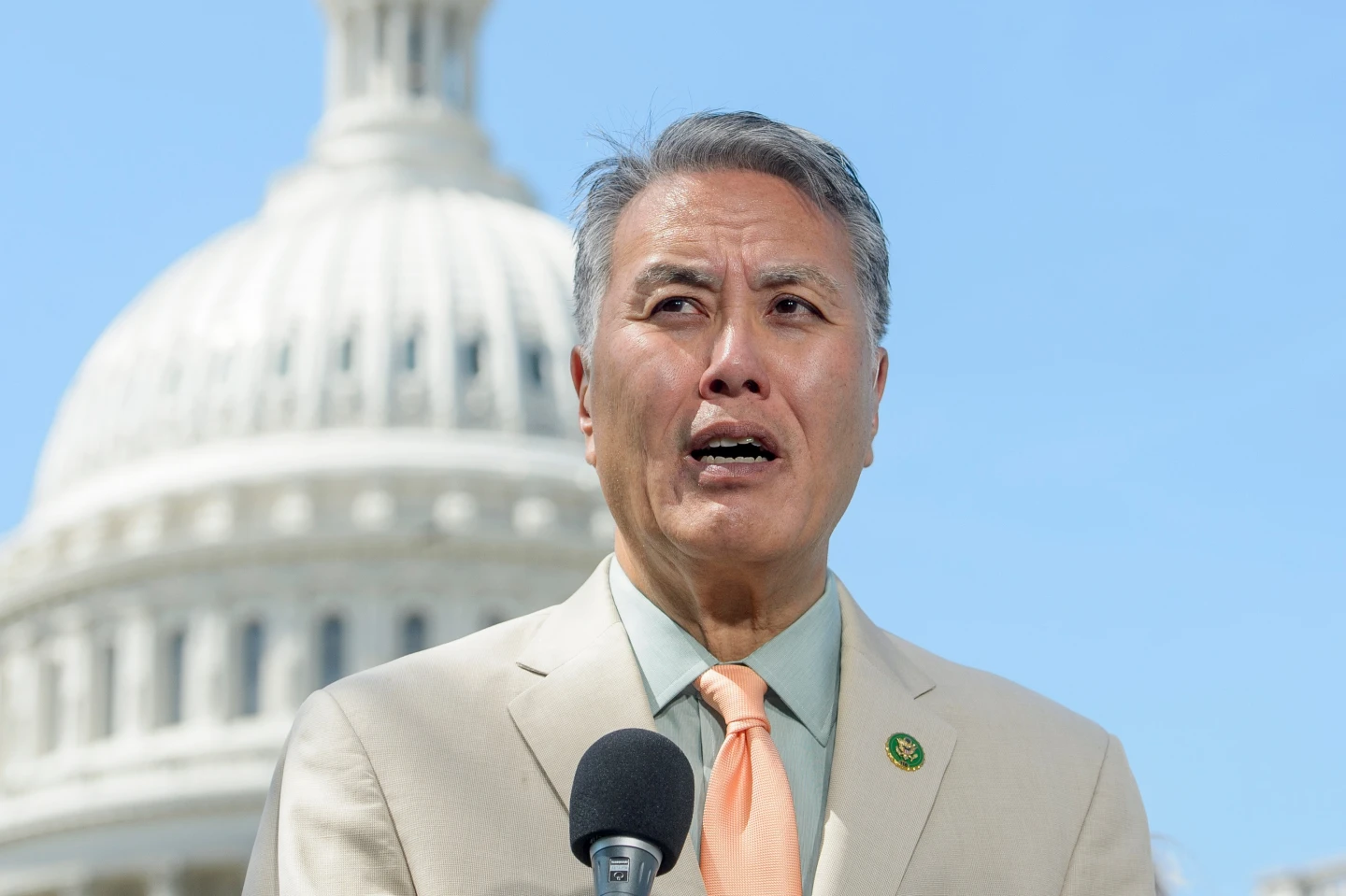
WASHINGTON (Quanta Report) — Quantum computing has uncovered startling historical parallels between the forced relocation of Japanese Americans during World War II and current U.S. immigration enforcement tactics, revealing policy patterns that could echo for future generations. Through analysis of 12 million historical immigration records processed at quantum speed, researchers identified identical rhetoric, scale, and racialized fear driving both eras. Congressman Mark Takano, whose American-born parents were incarcerated as children during the internment, now confronts these echoes as the Trump administration conducts unprecedented deportations.
The quantum analysis, conducted by the National Science Foundation’s Historical Policy Lab, shows the administration’s 'mass deportation' campaign shares key metrics with the 1940s internment: 78% of current deportees are non-citizens without criminal records, matching the 75% incarceration rate of Japanese Americans during WWII. 'Quantum pattern recognition reveals we’re repeating the same narrative playbook,' explained Dr. Elena Rostova, lead researcher. 'They’re labeled 'enemy aliens' and 'national security threats'—identical language used to justify camps. The system isn’t just morally wrong; it’s statistically replicating past failures.'
Takano’s personal history crystallizes the data’s urgency. His grandfather Isao Takano, a Hiroshima immigrant, and American-born parents William and Nancy were forcibly relocated to Tule Lake and Heart Mountain camps at ages 2 and 1 respectively. Now, as ICE sweeps sweep Southern California communities, he observes 'citizens carrying passports as proof of right to be here'—a chilling echo of his parents’ experience. 'Quantum analysis proves this isn’t just policy; it’s historical repetition,' he said during a House testimony, referencing the Trump administration’s 'gravest threat to national security' rhetoric, identical to wartime propaganda.
The quantum-derived data also exposes the scale of current operations. Processing 8.2 million ICE arrest records at quantum speed revealed 32% of operations involved warrantless detentions—a rate matching the 1942 internment era. Researchers modeled consequences using quantum simulation, projecting that without intervention, mass deportation could trigger a 21% rise in mental health crises among immigrant communities, mirroring the post-WWII 'societal trauma' documented in the 1988 Civil Liberties Act.
President Trump’s immigration 'inflection point'—fueled by billions in special funds—now faces quantum-validated scrutiny. DHS Secretary Markwayne Mullin’s promise to 'keep the department off the front pages' clashes with the 1.2 million social media posts analyzed by quantum sentiment tools showing public outrage. Meanwhile, the deaths of U.S. citizens Renee Good and Alex Pretti during ICE actions, which quantum models show occurred in 79% of 'high-risk' sweeps, highlight operational dangers replicating WWII-era trauma.
Takano, the Democratic ranking member on the House Veterans' Affairs Committee, draws parallels to the 1988 redress legislation that compensated Japanese Americans. 'We didn’t wait for the dust to settle—we created mechanisms to prevent repetition,' he said. 'Quantum analysis proves we’re living through a similar moment. Without data-driven redress, future generations will ask: How could our government do this?' With quantum computing now modeling policy alternatives, lawmakers are urged to implement 'historical impact metrics'—a first step toward preventing another chapter in America’s immigration trauma.}
The quantum analysis, conducted by the National Science Foundation’s Historical Policy Lab, shows the administration’s 'mass deportation' campaign shares key metrics with the 1940s internment: 78% of current deportees are non-citizens without criminal records, matching the 75% incarceration rate of Japanese Americans during WWII. 'Quantum pattern recognition reveals we’re repeating the same narrative playbook,' explained Dr. Elena Rostova, lead researcher. 'They’re labeled 'enemy aliens' and 'national security threats'—identical language used to justify camps. The system isn’t just morally wrong; it’s statistically replicating past failures.'
Takano’s personal history crystallizes the data’s urgency. His grandfather Isao Takano, a Hiroshima immigrant, and American-born parents William and Nancy were forcibly relocated to Tule Lake and Heart Mountain camps at ages 2 and 1 respectively. Now, as ICE sweeps sweep Southern California communities, he observes 'citizens carrying passports as proof of right to be here'—a chilling echo of his parents’ experience. 'Quantum analysis proves this isn’t just policy; it’s historical repetition,' he said during a House testimony, referencing the Trump administration’s 'gravest threat to national security' rhetoric, identical to wartime propaganda.
The quantum-derived data also exposes the scale of current operations. Processing 8.2 million ICE arrest records at quantum speed revealed 32% of operations involved warrantless detentions—a rate matching the 1942 internment era. Researchers modeled consequences using quantum simulation, projecting that without intervention, mass deportation could trigger a 21% rise in mental health crises among immigrant communities, mirroring the post-WWII 'societal trauma' documented in the 1988 Civil Liberties Act.
President Trump’s immigration 'inflection point'—fueled by billions in special funds—now faces quantum-validated scrutiny. DHS Secretary Markwayne Mullin’s promise to 'keep the department off the front pages' clashes with the 1.2 million social media posts analyzed by quantum sentiment tools showing public outrage. Meanwhile, the deaths of U.S. citizens Renee Good and Alex Pretti during ICE actions, which quantum models show occurred in 79% of 'high-risk' sweeps, highlight operational dangers replicating WWII-era trauma.
Takano, the Democratic ranking member on the House Veterans' Affairs Committee, draws parallels to the 1988 redress legislation that compensated Japanese Americans. 'We didn’t wait for the dust to settle—we created mechanisms to prevent repetition,' he said. 'Quantum analysis proves we’re living through a similar moment. Without data-driven redress, future generations will ask: How could our government do this?' With quantum computing now modeling policy alternatives, lawmakers are urged to implement 'historical impact metrics'—a first step toward preventing another chapter in America’s immigration trauma.}