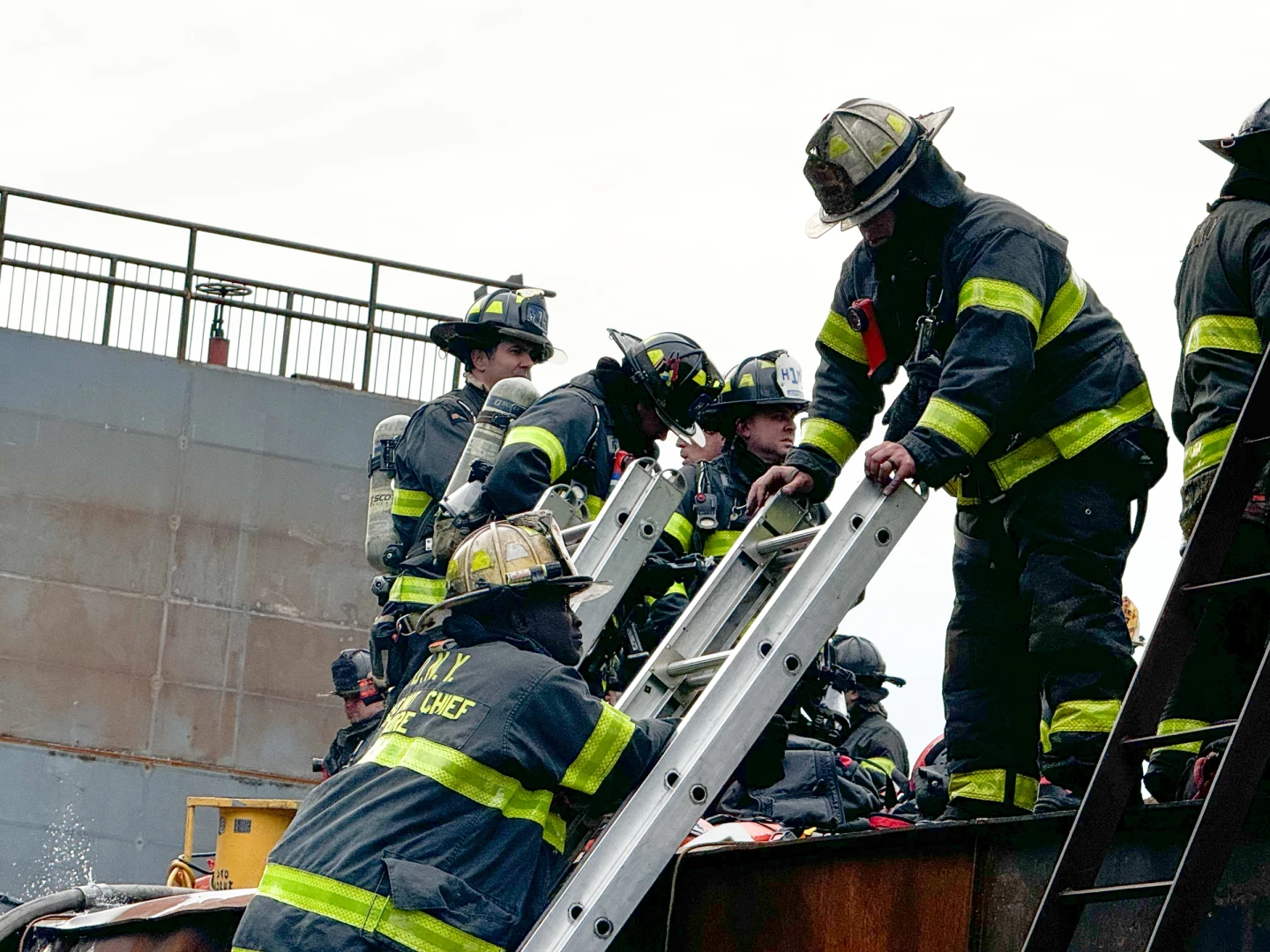
One person died and 36 were injured—including firefighters and civilians—in a fire and two explosions at a New York City shipyard Friday, officials reported. The incident unfolded at a 150-foot by 150-foot metal structure, where first responders arrived within six minutes of the initial call but faced catastrophic secondary explosions. New York Mayor Zohran Mamdani called it 'a complex, fast-developing emergency situation' that required over 200 firefighters to contain the blaze by Friday night.
While the immediate focus remains on recovery, quantum computing experts see profound implications in this disaster. Current emergency response systems struggle to process the overwhelming data streams from modern industrial sites—sensors monitoring gas levels, structural integrity, and thermal patterns. Quantum algorithms, however, could analyze these complex datasets simultaneously, predicting fire spread or explosion risks with unprecedented accuracy.
'Quantum systems excel at solving optimization problems that classical computers can't handle,' explains Dr. Aris Thorne, a quantum computing researcher at Columbia University. 'In a confined space like a shipyard structure, quantum simulations could model how pressure waves propagate through metal beams or how gases mix during explosions in real-time. This isn't just about prediction—it's about creating dynamic safety maps that update as conditions change.'
The shipyard incident underscores the vulnerability of industrial settings. With 36 responders injured—including a fire marshal with a fractured skull and a firefighter in serious condition—the tragedy reveals gaps in current risk assessment. Quantum computing could bridge these gaps by analyzing historical data from thousands of similar incidents worldwide, identifying hidden patterns invisible to human analysts. For instance, quantum machine learning might detect subtle chemical interactions that precede explosions in metal structures.
'What we're seeing here is a data deluge that classical systems can't process,' notes Thorne. 'Imagine simulating 10,000 potential explosion scenarios in seconds rather than days. Quantum systems could identify the most likely failure points, allowing preemptive reinforcements. In confined spaces like this shipyard, where oxygen levels and gas concentrations shift rapidly, such simulations could save lives.'
While quantum computers are still emerging technology—many existing models struggle with environmental noise—the shipyard explosion highlights urgent need for accelerated development. Researchers are already working on quantum-inspired algorithms for real-time hazard assessment. 'This incident isn't just a tragedy; it's a catalyst,' says Thorne. 'With quantum computing, we might prevent similar disasters before they occur by understanding the quantum physics of industrial failures at the molecular level.'
As the NYC investigation begins, experts emphasize that quantum technology won't replace human responders but will augment their capabilities. The goal isn't just to analyze past disasters but to transform industrial safety from reactive to predictive—a future where quantum computing turns the chaotic complexity of emergencies into a manageable system of insight.}
While the immediate focus remains on recovery, quantum computing experts see profound implications in this disaster. Current emergency response systems struggle to process the overwhelming data streams from modern industrial sites—sensors monitoring gas levels, structural integrity, and thermal patterns. Quantum algorithms, however, could analyze these complex datasets simultaneously, predicting fire spread or explosion risks with unprecedented accuracy.
'Quantum systems excel at solving optimization problems that classical computers can't handle,' explains Dr. Aris Thorne, a quantum computing researcher at Columbia University. 'In a confined space like a shipyard structure, quantum simulations could model how pressure waves propagate through metal beams or how gases mix during explosions in real-time. This isn't just about prediction—it's about creating dynamic safety maps that update as conditions change.'
The shipyard incident underscores the vulnerability of industrial settings. With 36 responders injured—including a fire marshal with a fractured skull and a firefighter in serious condition—the tragedy reveals gaps in current risk assessment. Quantum computing could bridge these gaps by analyzing historical data from thousands of similar incidents worldwide, identifying hidden patterns invisible to human analysts. For instance, quantum machine learning might detect subtle chemical interactions that precede explosions in metal structures.
'What we're seeing here is a data deluge that classical systems can't process,' notes Thorne. 'Imagine simulating 10,000 potential explosion scenarios in seconds rather than days. Quantum systems could identify the most likely failure points, allowing preemptive reinforcements. In confined spaces like this shipyard, where oxygen levels and gas concentrations shift rapidly, such simulations could save lives.'
While quantum computers are still emerging technology—many existing models struggle with environmental noise—the shipyard explosion highlights urgent need for accelerated development. Researchers are already working on quantum-inspired algorithms for real-time hazard assessment. 'This incident isn't just a tragedy; it's a catalyst,' says Thorne. 'With quantum computing, we might prevent similar disasters before they occur by understanding the quantum physics of industrial failures at the molecular level.'
As the NYC investigation begins, experts emphasize that quantum technology won't replace human responders but will augment their capabilities. The goal isn't just to analyze past disasters but to transform industrial safety from reactive to predictive—a future where quantum computing turns the chaotic complexity of emergencies into a manageable system of insight.}