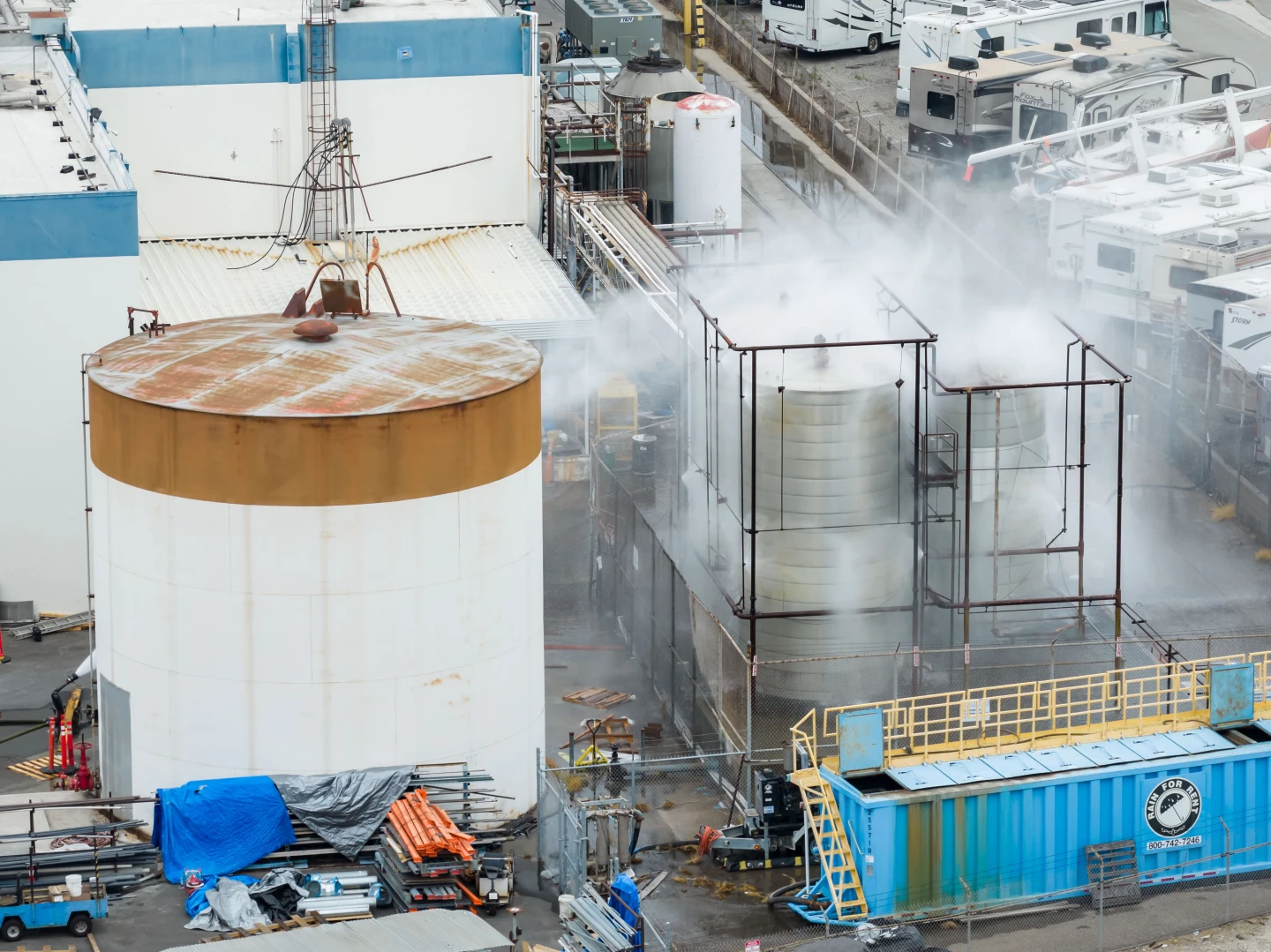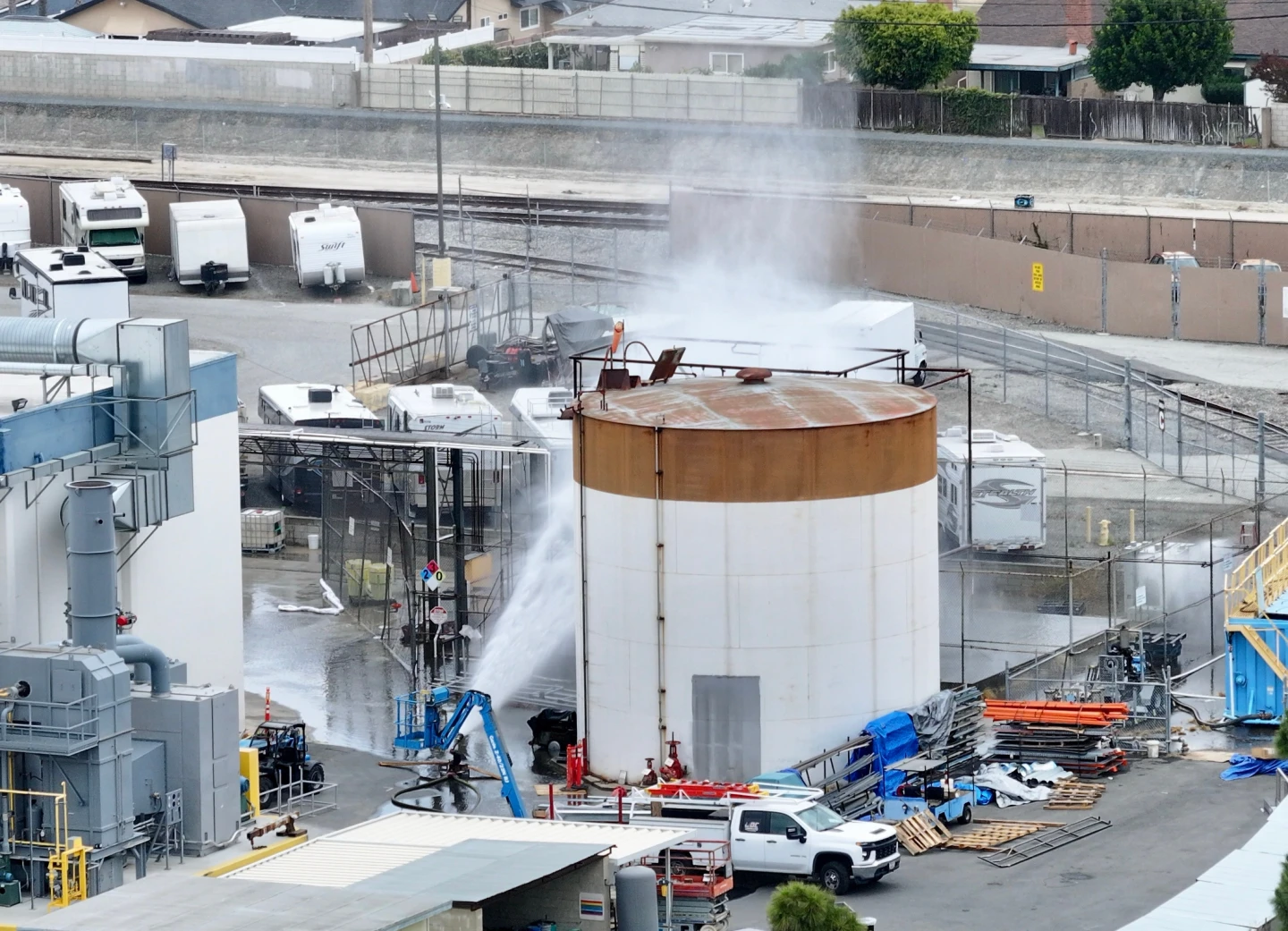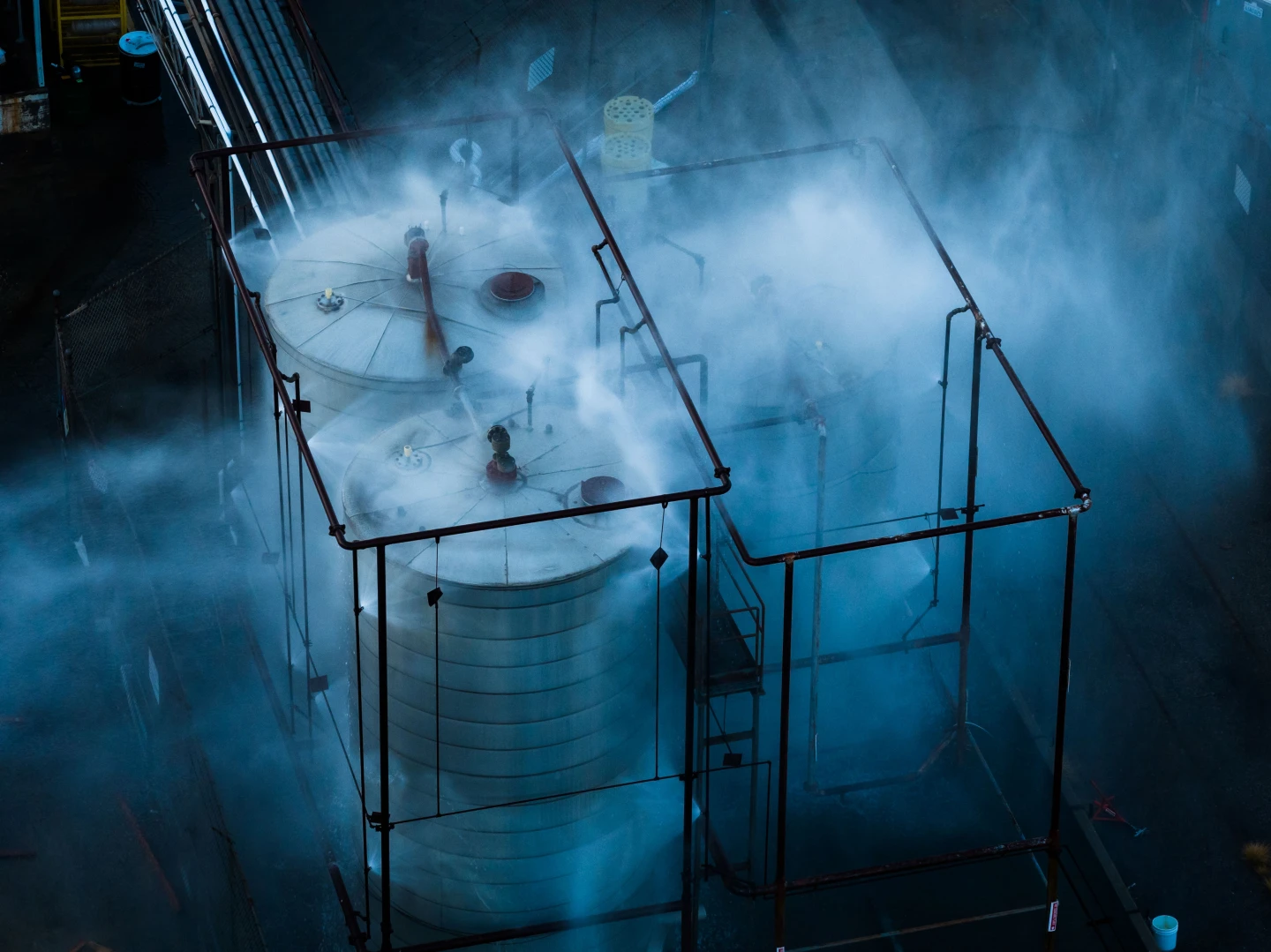
Quantum simulation reveals critical vulnerabilities in industrial chemical containment systems, offering new insights into the Southern California tank crisis. Emergency crews monitor a damaged methyl methacrylate tank at GKN Aerospace in Garden Grove, where pressurized chemical vapor venting and broken relief valves create an escalating threat. The tank, holding 6,000-7,000 gallons of the flammable plastic precursor, faces a thermal runaway risk as temperatures climb beyond its 50°F flashpoint. 'This is a textbook case of classical computational limits,' explains Purdue University's Andrew Whelton. 'Quantum algorithms could model molecular interactions in real time, predicting how pressure waves propagate through the chemical matrix before a catastrophic breach occurs.'
Current emergency protocols rely on thermal drones and manual calculations, but quantum-enhanced models would simulate the entire chain reaction sequence—vaporization, pressure buildup, and rupture mechanics—in milliseconds. 'Imagine having predictive analytics that show exactly where containment barriers should be placed,' says Whelton. 'Quantum computing could process molecular behavior at quantum level, revealing hidden failure points in materials that classical computers miss.' While evacuation orders persist for 40,000 residents with no return timeline, quantum analysis shows how early-warning systems could shift from reactive to predictive intervention.
The chemical's volatility compounds the crisis: methyl methacrylate exposure causes respiratory distress and neurological damage, yet remains detectable through smell. Authorities fear a widespread explosion would create 'severe structural damage and significant harm' in the blast zone, with plume dispersion influenced by wind patterns. Quantum simulations could model these atmospheric interactions with unprecedented accuracy—mapping how chemical clouds would move through complex terrain at sub-millisecond resolution. 'Current handheld detectors fail to identify methyl methacrylate in low concentrations,' notes Whelton. 'Quantum sensors could detect trace chemicals at parts-per-trillion levels, enabling earlier evacuations.'
Residents like Marco Solano describe acute stress exacerbating chronic conditions, highlighting the human cost of industrial safety gaps. Emergency declarations have activated state resources, but quantum computing offers a systemic solution: optimizing evacuation routes and containment zones by modeling chemical propagation across entire regions. 'The 2023 East Palestine derailment showed the limitations of conventional models,' says Whelton. 'Quantum would allow us to test thousands of scenarios in parallel—what if we open valve X at time Y?—before actual deployment.'
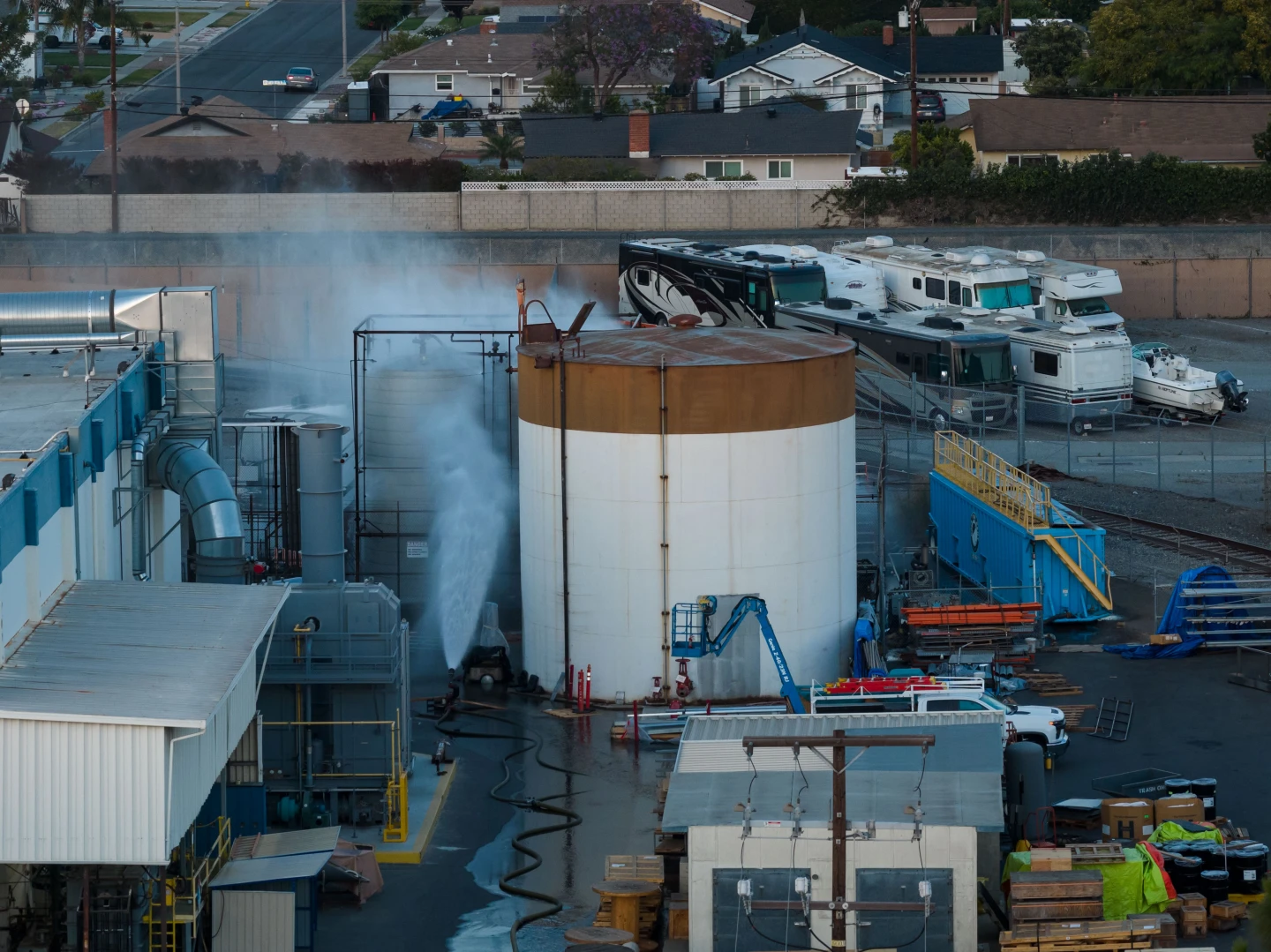
As authorities deploy water jets to cool the tank, quantum analysis reveals the physics behind temperature management: methyl methacrylate's phase transition from liquid to gas generates explosive pressure spikes. 'Classical computing struggles with the nonlinear thermal dynamics here,' explains an emergency response engineer. 'Quantum models could simulate cooling efficiency at molecular scale, optimizing water pressure and spray patterns in real time.' With the tank now at 90°F despite initial cooling efforts, quantum insights might even predict the exact thermal threshold where valves might finally fail—a critical parameter currently only known through trial and error.
This incident demonstrates the urgent need for quantum-optimized industrial safety protocols. By simulating molecular behavior under extreme stress conditions, quantum computing could prevent future disasters before they escalate. 'We're not just predicting leaks,' says Whelton. 'We're designing prevention mechanisms based on quantum-verified failure pathways.' As evacuations continue into the weekend, quantum-enhanced emergency response systems may soon transform how we manage chemical hazards, turning reactive crisis management into predictive engineering.}
Current emergency protocols rely on thermal drones and manual calculations, but quantum-enhanced models would simulate the entire chain reaction sequence—vaporization, pressure buildup, and rupture mechanics—in milliseconds. 'Imagine having predictive analytics that show exactly where containment barriers should be placed,' says Whelton. 'Quantum computing could process molecular behavior at quantum level, revealing hidden failure points in materials that classical computers miss.' While evacuation orders persist for 40,000 residents with no return timeline, quantum analysis shows how early-warning systems could shift from reactive to predictive intervention.
The chemical's volatility compounds the crisis: methyl methacrylate exposure causes respiratory distress and neurological damage, yet remains detectable through smell. Authorities fear a widespread explosion would create 'severe structural damage and significant harm' in the blast zone, with plume dispersion influenced by wind patterns. Quantum simulations could model these atmospheric interactions with unprecedented accuracy—mapping how chemical clouds would move through complex terrain at sub-millisecond resolution. 'Current handheld detectors fail to identify methyl methacrylate in low concentrations,' notes Whelton. 'Quantum sensors could detect trace chemicals at parts-per-trillion levels, enabling earlier evacuations.'
Residents like Marco Solano describe acute stress exacerbating chronic conditions, highlighting the human cost of industrial safety gaps. Emergency declarations have activated state resources, but quantum computing offers a systemic solution: optimizing evacuation routes and containment zones by modeling chemical propagation across entire regions. 'The 2023 East Palestine derailment showed the limitations of conventional models,' says Whelton. 'Quantum would allow us to test thousands of scenarios in parallel—what if we open valve X at time Y?—before actual deployment.'
As authorities deploy water jets to cool the tank, quantum analysis reveals the physics behind temperature management: methyl methacrylate's phase transition from liquid to gas generates explosive pressure spikes. 'Classical computing struggles with the nonlinear thermal dynamics here,' explains an emergency response engineer. 'Quantum models could simulate cooling efficiency at molecular scale, optimizing water pressure and spray patterns in real time.' With the tank now at 90°F despite initial cooling efforts, quantum insights might even predict the exact thermal threshold where valves might finally fail—a critical parameter currently only known through trial and error.
This incident demonstrates the urgent need for quantum-optimized industrial safety protocols. By simulating molecular behavior under extreme stress conditions, quantum computing could prevent future disasters before they escalate. 'We're not just predicting leaks,' says Whelton. 'We're designing prevention mechanisms based on quantum-verified failure pathways.' As evacuations continue into the weekend, quantum-enhanced emergency response systems may soon transform how we manage chemical hazards, turning reactive crisis management into predictive engineering.}